
Spicy Pasta Arrabbiata (Easy 25-Minute Recipe)
Pasta arrabbiata is proof that a short list of ingredients can taste bold and exciting. Garlic sizzles in good olive oil with a pinch of chili, ripe tomatoes simmer into a rich red sauce, and the whole thing is tossed with tender penne and finished with fresh basil and a shower of cheese. It is fiery, tangy, garlicky and ready in 25 minutes.
In Italian, arrabbiata means angry, and the name fits. The sauce gets its heat from red chili peppers, which turn the olive oil a gentle red and give every bite a warm, lingering kick. The best part is that you decide how angry it gets. Make it mild for the family or properly hot for chili lovers. Below you will find the full recipe with step-by-step photos, a guide to heat levels, tips on choosing tomatoes and plenty of ways to fix common problems, so your sauce turns out vibrant and balanced every time.

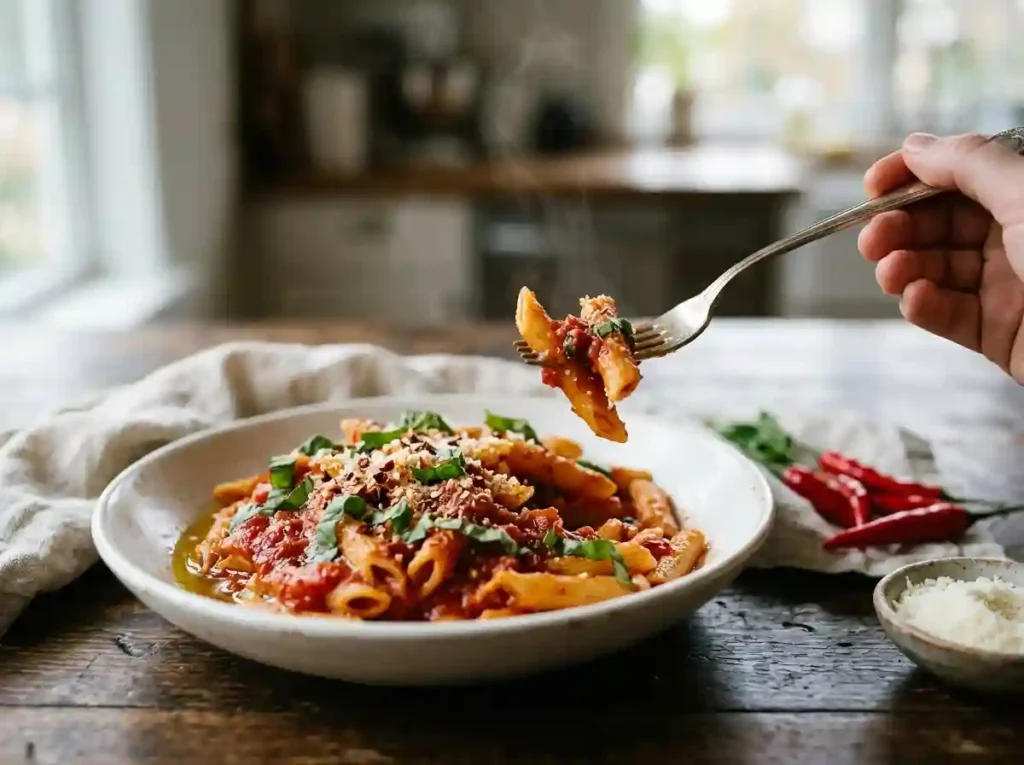
Spicy pasta arrabbiata, ready in about 25 minutes.
Why You’ll Love This Recipe
- It is quick. From start to table in about 25 minutes, with most of that time hands-off while the sauce simmers.
- It uses pantry staples. Canned tomatoes, garlic, chili flakes, olive oil and pasta. You probably have almost everything already.
- You control the heat. Mild, medium or hot, it is your choice, and it is easy to adjust.
- It is naturally vegan. Skip the cheese and it is a plant-based dinner without any other changes.
- The flavor is big and fresh. The sauce is bright, garlicky and tomato-forward, not heavy or creamy.
- It is budget-friendly. A cheap, filling dinner that tastes like a trattoria meal.
- The sauce freezes well. Make a double batch and keep some for busy nights.
What Does Pasta Arrabbiata Taste Like?
It tastes like a bolder, spicier cousin of a simple tomato sauce. The tomatoes are sweet and tangy, the garlic is mellow and fragrant, and the chili adds a warm heat that builds with each bite instead of burning right away. Olive oil gives the sauce a silky, glossy finish. Fresh basil adds a peppery, almost minty freshness, and the cheese brings a salty, savory depth that rounds everything out. If you like pasta with a little fire, this will become a regular.
Ingredients You’ll Need

Simple ingredients: penne, canned tomatoes, garlic, chili, olive oil, basil and cheese.
For the Sauce
- ¼ cup (60 ml) good extra virgin olive oil
- 5 garlic cloves, thinly sliced
- 1 to 2 tsp red pepper flakes (or 1 to 2 fresh red chilies, chopped)
- 1 can (28 oz / 800 g) whole peeled tomatoes, crushed by hand
- 1 tbsp tomato paste (optional, for depth)
- ½ tsp salt, plus more to taste
- Pinch of sugar (optional, only if the tomatoes taste sharp)
For the Pasta and Finish
- 12 oz (340 g) penne rigate
- ½ cup (120 ml) starchy pasta water, reserved
- ½ cup (50 g) freshly grated pecorino Romano or parmesan, plus extra for serving
- ¼ cup torn fresh basil leaves
- A drizzle of extra virgin olive oil, to finish
A Few Notes on the Ingredients
Tomatoes: Whole peeled canned tomatoes, especially San Marzano style, give the best flavor and the sweetest, richest sauce. Crush them with your hands in a bowl so you get uneven, rustic pieces. Pre-crushed tomatoes also work, and passata makes a smoother sauce. Avoid tomatoes with added herbs or sugar.
Olive oil: The oil is a main flavor in this sauce, so use a good extra virgin one. A quarter cup may seem like a lot, but it carries the chili and garlic flavor and gives the sauce a glossy finish.
Garlic: Slice it thinly rather than mincing. Slices cook gently without scorching, and they give soft, sweet pieces in the sauce. Minced garlic burns far more easily in hot oil.
Chili: Dried red pepper flakes are the easiest and most consistent. Fresh red chilies, such as Calabrian, red jalapeño or Fresno, add a fruitier, brighter heat. Use the amount that suits you.
Tomato paste: A spoonful is optional but makes the sauce taste richer and rounder, especially when your tomatoes are a bit watery.
Cheese: Pecorino Romano is the traditional pick and is sharp and salty. Parmesan is milder. Both should be freshly grated from a block for the best melt and flavor.
Basil: Add it at the end. Cooking basil dulls its color and flavor, so tear it and stir it in off the heat.
Equipment You’ll Need
- A large pot for the pasta and a colander
- A large, wide skillet (12 inches / 30 cm) so the sauce reduces quickly and you have room to toss the pasta
- A wooden spoon and tongs
- A box grater or microplane for the cheese
Which Pasta Shape Works Best?
Penne rigate is the classic partner for arrabbiata. The ridges grab the sauce and the hollow tubes trap bits of garlic and chili. Rigatoni, ziti, mezze maniche and fusilli all work well for the same reason. Long pasta like spaghetti, linguine and bucatini is also delicious and slightly more elegant. Choose a bronze-cut pasta if you can find it, since its rough surface holds sauce better.
Arrabbiata 101: Heat, Tomatoes and Balance
Arrabbiata is simple, so small details matter. Here is what to know before you start.
How to Control the Heat
| Heat level | Red pepper flakes | Best for |
|---|---|---|
| Mild | ½ tsp | Families, kids or anyone who prefers a gentle warmth |
| Medium | 1 tsp | A noticeable but comfortable kick |
| Hot | 2 tsp, or 1 to 2 fresh chilies | Chili lovers who want real fire |
Chili flakes bloom in warm oil, which spreads their flavor through the whole sauce. If you are unsure, start with less. You can always add a pinch more at the end, or pass a bottle of chili oil around the table.
Why Slice the Garlic and Start in Cool Oil
Add the sliced garlic and chili flakes to the oil while it is still cool, then bring it up to medium heat. This lets the garlic and chili infuse the oil gradually, so the flavor is rounder and there is much less risk of burning. When the garlic turns pale gold and smells sweet, add the tomatoes right away to stop the cooking.
How to Balance the Tomatoes
Canned tomatoes can be slightly sharp. A spoonful of tomato paste, a long enough simmer, and a pinch of sugar if needed will fix it. The finishing olive oil and cheese also soften the acidity. Taste the sauce before you add the pasta, and adjust the salt, chili and sweetness.
How to Make Pasta Arrabbiata
Step 1: Prep Your Ingredients
Thinly slice the garlic, crush the tomatoes by hand into a bowl and grate the cheese. Having everything ready is important, because the sauce comes together quickly.
Step 2: Boil the Pasta
Bring a large pot of generously salted water to a boil. The water should taste like mild sea water. Cook the penne for 2 minutes less than the package says, since it will finish cooking in the sauce. Before draining, scoop out ½ cup of the starchy pasta water.

Salt the water well and cook the pasta just short of done.
Step 3: Bloom the Garlic and Chili
Add the olive oil, garlic and red pepper flakes to a cold skillet. Heat over medium until the garlic begins to sizzle gently, then cook for 1 to 2 minutes, stirring, until the garlic is just pale gold. Do not let it brown. Stir in the tomato paste, if using, and cook for 30 seconds.

Let the garlic turn pale gold, never brown.
Step 4: Add the Tomatoes
Pour in the crushed tomatoes with their juices, add the salt and stir. Scrape the bottom of the pan to lift the garlic and chili. Bring the sauce to a lively simmer.

Add the tomatoes right when the garlic turns pale gold.
Step 5: Simmer the Sauce
Reduce the heat to medium and simmer for 10 to 12 minutes, stirring now and then, until the sauce is thick, glossy and slightly darker in color. A thin layer of red oil will rise to the surface, which is exactly what you want. Taste, and add a pinch of sugar if it is sharp, and more salt or chili if needed.

The sauce is ready when thick, glossy and a little darker.
Step 6: Toss the Pasta in the Sauce
Add the drained penne directly to the skillet along with a splash of the reserved pasta water. Toss with tongs over medium heat for 1 to 2 minutes, until the sauce clings to every piece and looks glossy. Add more pasta water, a spoonful at a time, if it looks too thick.

Toss with a splash of pasta water until glossy.
Step 7: Finish and Serve
Take the pan off the heat. Stir in half the cheese and most of the basil, then drizzle with a little fresh olive oil. Serve right away in warm bowls, topped with the remaining cheese and basil. Pass extra chili flakes at the table for anyone who wants more heat.

Finish with fresh basil and grated cheese.

Spicy, tangy and full of flavor.
Tips for the Best Pasta Arrabbiata
- Start the garlic in cool oil. It infuses gently and does not burn.
- Watch the garlic closely. Pale gold is perfect. Brown garlic turns bitter and cannot be saved.
- Use good canned tomatoes. They make up most of the sauce, so quality matters.
- Crush by hand. It gives a more rustic texture than a blender and keeps the sauce fresh-tasting.
- Salt the pasta water well. This seasons the pasta from the inside and makes the whole dish taste better.
- Undercook the pasta slightly. It finishes in the sauce and absorbs flavor.
- Use the pasta water. Its starch helps the sauce cling and creates a silky coating.
- Add the basil and cheese off the heat. They stay fresher and the cheese melts smoothly.
- Finish with raw olive oil. A final drizzle adds fruity aroma and gloss.
Common Mistakes to Avoid
- Burning the garlic. This is the number one cause of a bitter sauce. Use gentle heat and add the tomatoes as soon as the garlic turns pale gold.
- Adding too much chili too early. You cannot take heat out. Start with less, taste at the end and add more if needed.
- Rushing the simmer. A sauce that does not cook long enough tastes thin and sharp. Give it at least 10 minutes.
- Overcooking the pasta. Soft pasta turns mushy in the sauce. Drain it a couple of minutes early.
- Draining all the pasta water. Without it, the sauce can be too thick and will not coat the pasta well.
- Skipping the salt in the water. Unsalted pasta tastes flat, and no sauce can fully fix it.
- Using a small pan. A crowded pan makes the sauce reduce slowly and makes tossing messy. Use a wide skillet.
Variations to Try
- Shrimp Arrabbiata: Sear 1 lb of seasoned shrimp for 2 minutes per side, set aside and add them back to the finished sauce.
- Chicken Arrabbiata: Add sliced, pan-seared chicken breast or thighs for a more filling dinner.
- Sausage Arrabbiata: Brown 8 oz of Italian sausage before the garlic, then continue with the recipe for a hearty version.
- Creamy Arrabbiata: Stir in 2 to 3 tablespoons of cream or mascarpone at the end. It softens the heat and gives a pink sauce.
- With Olives and Capers: Add ¼ cup of chopped olives and 1 tablespoon of capers with the tomatoes for a puttanesca-style twist.
- Baked Arrabbiata: Toss the pasta with the sauce, top with mozzarella and bake at 400°F (200°C) for 15 minutes.
- With Vegetables: Add sautéed zucchini, mushrooms or baby spinach for extra vegetables.
- With White Beans: Stir in a can of drained cannellini beans for plant-based protein.
Easy Substitutions
| Ingredient | You can use |
|---|---|
| Penne | Rigatoni, ziti, fusilli, spaghetti or linguine |
| Whole canned tomatoes | Crushed tomatoes or passata |
| Red pepper flakes | Fresh red chilies, Calabrian chili paste or a pinch of cayenne |
| Pecorino Romano | Parmesan or Grana Padano |
| Fresh basil | Fresh parsley, or 1 tsp dried oregano added with the tomatoes |
| Tomato paste | An extra pinch of sugar, or a spoonful of the tomato juice cooked down |
| Olive oil | A mix of olive oil and a little butter for a softer flavor |
Making It Vegan or Gluten-Free
The sauce is already vegan. Use an egg-free dried pasta, leave out the cheese and finish with basil, a drizzle of olive oil and a sprinkle of nutritional yeast or a vegan parmesan. For gluten-free, use a good-quality gluten-free penne, cook it just until al dente, and save a little extra pasta water, since gluten-free pasta absorbs more sauce.
Make-Ahead Arrabbiata Sauce
The sauce is a great make-ahead candidate. It keeps in the fridge for up to 5 days and in the freezer for up to 3 months, and the flavor often gets even better after a day. Make a double batch, freeze half in a flat freezer bag, and on a busy night you only need to boil the pasta. It is also wonderful as a spicy pizza sauce, a base for baked eggs, or spooned over chicken or grilled vegetables.
What to Serve With Pasta Arrabbiata
A fresh, cool side balances the heat. A simple green salad with lemon, olive oil and shaved parmesan is the best match. Garlic bread or crusty focaccia is perfect for mopping up the red sauce. For vegetables, try roasted broccoli, sautéed greens or a simple caprese salad. If you want protein, grilled chicken, meatballs or sausages are great on the side. A glass of medium-bodied red wine such as Chianti or Montepulciano suits it well, and a cold sparkling water with lemon helps tame the chili.

Serve with garlic bread and a crisp green salad.
Storing and Reheating Leftovers
Cool the pasta quickly and move it to an airtight container within 2 hours of cooking. It keeps in the fridge for up to 4 days. The pasta absorbs sauce as it sits, which is normal.
To reheat, warm it in a skillet over low heat with a splash of water, stirring gently until hot and glossy again. You can also microwave it in short bursts, stirring in between. Add fresh basil and a drizzle of olive oil after reheating, since they taste best fresh. Arrabbiata also makes a great packed lunch, and the chili flavor deepens overnight.

Leftovers keep well for up to 4 days.
Making It for Guests
This is a good dish for company because most of the work is simple and quick. Slice the garlic and grate the cheese in advance. You can even make the sauce earlier in the day and reheat it gently while the pasta boils. Toss, add the basil and cheese, and serve in warm bowls. Set out extra chili flakes and olive oil so guests can adjust the heat themselves.
Frequently Asked Questions
What does arrabbiata mean?
Arrabbiata means angry in Italian. The sauce gets its name from the heat of the red chili peppers, which give it a fiery kick. It comes from Rome, where it is traditionally served with penne.
How spicy is pasta arrabbiata?
It is meant to be noticeably spicy, but you control the heat. One teaspoon of red pepper flakes gives a medium kick, half a teaspoon is mild, and two teaspoons or a fresh hot chili makes it properly fiery. You can always add more at the table.
Can I use fresh tomatoes instead of canned?
You can, but canned tomatoes are usually better unless fresh ones are at peak summer ripeness. Canned whole peeled tomatoes are picked and packed when ripe, so they give a sweeter, deeper sauce year round. If you use fresh, choose ripe plum tomatoes, peel them and cook the sauce a few minutes longer.
Why does my arrabbiata taste bitter or too acidic?
Bitterness usually comes from burnt garlic, so cook it gently and stop when it is pale gold. Acidity comes from underripe tomatoes. A pinch of sugar, a spoonful of tomato paste or a small knob of butter balances it. Simmering long enough also mellows the sharpness.
Should I use parmesan or pecorino?
Traditional Roman arrabbiata is finished with pecorino Romano, which is sharper and saltier. Parmesan is milder and nuttier, and works well too. Use whichever you have, and taste before adding extra salt since both cheeses are salty.
Can I make it vegan?
Yes. Arrabbiata sauce is naturally vegan, since it is just tomatoes, garlic, chili and olive oil. Check that your pasta has no egg, skip the cheese and finish with fresh basil, a drizzle of olive oil or a sprinkle of nutritional yeast.
Can I freeze the sauce or the leftovers?
The sauce freezes very well for up to 3 months. Cool it completely, then freeze it in an airtight container or freezer bag. Thaw overnight in the fridge and reheat gently, then toss with freshly cooked pasta. Cooked pasta with sauce can be frozen too, but the texture is best when you freeze the sauce on its own.
Final Thoughts
Pasta arrabbiata is a classic for a reason. It uses a handful of simple ingredients, takes less than half an hour and delivers big, bright flavor with a warm kick of chili. The keys are easy to remember: start the garlic in cool oil and stop at pale gold, use good canned tomatoes, simmer until thick and glossy, and finish with pasta water, fresh basil and cheese. Do that, and you will have a vibrant, spicy bowl of pasta that tastes like it came from a Roman trattoria.

We’d Love to Hear From You!
Did you make this spicy pasta arrabbiata? Tell us how it turned out in the comments below, and let us know how hot you like it. Share any twists you tried, like shrimp, sausage or a splash of cream. We read every comment, and your tips might help other readers. If you enjoyed this recipe, save it on Pinterest for your next quick dinner.