
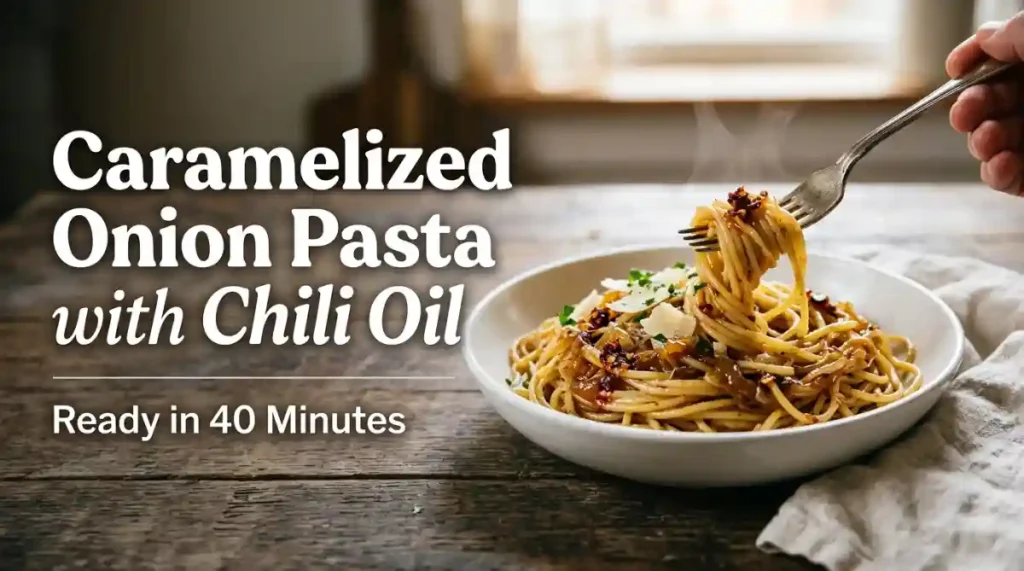
Caramelized Onion Pasta with Chili Oil (Ready in 40 Minutes)
Some of the best pasta dinners start with a humble onion. Cook three of them low and slow in butter and olive oil, and they melt into a sweet, savory, deeply golden-brown jam. Toss that with spaghetti and a little starchy pasta water, finish with a spoonful of fiery chili oil and a shower of parmesan, and you have a dinner that tastes far more expensive than it is.
This recipe has no cream, no meat and no hard-to-find ingredients. It is built on pantry staples: onions, garlic, butter, tomato paste, a little honey and soy sauce. Those last three are the secret. They add a gentle sweetness and a deep, almost meaty savoriness that make the onions taste even more caramelized. The chili oil brings heat and crunch to balance all that sweetness. Below you will find the full recipe with step-by-step photos, a guide to caramelizing onions properly, a quick homemade chili oil and plenty of tips so it works the first time.

Caramelized onion pasta with chili oil, ready in about 40 minutes.
Why You’ll Love This Recipe
- It is made from simple pantry ingredients. Onions, garlic, pasta, butter and a few sauces. No special shopping trip needed.
- The flavor is huge. Sweet onions, savory soy, a little tomato paste and a spicy chili oil finish hit every note.
- It is naturally vegetarian. No meat, no cream, yet it feels rich and satisfying.
- It is mostly hands-off. The onions need a stir every few minutes, so you can do other things while they cook.
- It is budget-friendly. A big bag of onions costs very little, and a dinner for four comes in at a fraction of restaurant prices.
- You can make the onions ahead. They keep for days, so a future weeknight pasta takes only about 15 minutes.
What Does Caramelized Onion Pasta Taste Like?
It is sweet, savory and a little spicy all at once. The onions are soft, silky and jammy, with a deep brown color and a toasty, almost butterscotch sweetness. Garlic and soy sauce add savory depth, and a touch of tomato paste gives a rounded, slightly tangy backbone. The pasta water turns everything into a glossy sauce that clings to each strand. Then the chili oil cuts through with warm heat and crispy bits, and the parmesan adds a salty, nutty finish. If you like French onion soup, you will love this pasta, since it is built on the same flavors.
Ingredients You’ll Need

Simple ingredients: onions, spaghetti, garlic, butter, honey, soy sauce and parmesan.
For the Caramelized Onions
- 3 large yellow onions (about 1½ lb / 700 g), halved and thinly sliced
- 3 tbsp butter
- 2 tbsp olive oil
- 1 tsp salt, plus more to taste
- 5 garlic cloves, minced
- 1 tbsp tomato paste
- 1 tbsp honey
- 1 tbsp soy sauce
- 1 tbsp balsamic or red wine vinegar (optional, but it brightens the sauce)
- ¼ cup (60 ml) water, plus a little more as needed for deglazing
For the Pasta and Finish
- 12 oz (340 g) spaghetti
- 1 cup (240 ml) starchy pasta water, reserved
- ¾ cup (75 g) freshly grated parmesan, plus extra for serving
- 2 to 3 tbsp chili oil or chili crisp, plus more for serving
- 2 tbsp chopped fresh parsley
- Freshly cracked black pepper
A Few Notes on the Ingredients
Onions: Yellow onions are the best choice. They have the right balance of sugar and sharpness, so they turn deeply sweet but still taste savory. Sweet onions brown quickly and can taste flat. Red onions are fine in a pinch but turn a darker, slightly grayish brown.
Butter and olive oil: Using both is a good idea. Butter gives flavor and helps with browning, while olive oil has a higher smoke point and keeps the butter from burning.
Honey: Just a tablespoon. It does not make the pasta sweet. It deepens the caramel flavor and helps the onions brown evenly. Maple syrup or a pinch of brown sugar work too.
Soy sauce: This adds salty, savory depth, a little like the beef broth in French onion soup. Use regular or low-sodium, and taste before adding extra salt.
Tomato paste: A spoonful adds umami and a little acidity. Cooking it for a minute with the onions removes any raw, tinny taste.
Chili oil or chili crisp: Use a store-bought jar or make the quick version below. Chili crisp has extra crunchy bits of fried garlic and shallot, which add great texture.
Pasta: Spaghetti is the classic pick, but linguine and bucatini are also great. They are long enough to hold the onions in every twirl.
Quick Homemade Chili Oil
If you do not have chili oil, you can make a fast version in 5 minutes. Put 1 tablespoon of red pepper flakes, 1 minced garlic clove, a pinch of salt and ½ teaspoon of sugar in a small heatproof bowl. Heat ¼ cup of neutral oil (such as avocado or vegetable oil) until it shimmers, then carefully pour it over the flakes. It will sizzle and bubble. Stir in 1 teaspoon of soy sauce once it settles. Let it sit while the pasta cooks and use as much as you like. It keeps in a jar in the fridge for up to 2 weeks.
Equipment You’ll Need
- A large, wide skillet (12 inches / 30 cm), preferably stainless steel or cast iron, so the onions spread in a thin layer and brown evenly
- A large pot for the pasta and a colander
- A sharp knife and a cutting board, or a mandoline for even slices
- A wooden spoon and tongs
Caramelizing Onions 101
Caramelized onions are the heart of this dish, so it is worth knowing what is happening in the pan. Raw onions are crisp and sharp. As they cook, their water cooks off and their natural sugars slowly brown, turning sweet, soft and golden. This takes time, and there are no shortcuts that give the same flavor. Here is what to expect at each stage.
- 0 to 8 minutes, soft and translucent: The onions release water and shrink. They look pale and wet. Keep stirring.
- 8 to 15 minutes, golden: The water has mostly cooked off, and the edges start to turn pale gold. The onions smell sweet.
- 15 to 25 minutes, amber brown: The color deepens and browned bits (called fond) build on the bottom of the pan. This is where the flavor is.
- 25 to 30 minutes, deep brown and jammy: The onions are mahogany brown, soft and sticky. When you lift a spoonful, it hangs together like jam. This is the stage we want.
The two most important rules are to keep the heat at medium-low and to be patient. If the browned bits on the bottom look too dark, add a splash of water and scrape them up. This is called deglazing, and it adds loads of flavor back into the onions without burning.
How to Make Caramelized Onion Pasta with Chili Oil
Step 1: Slice the Onions and Start the Pan
Cut the onions in half through the root, peel them and slice them thinly into half-moons, about ⅛ inch (3 mm) thick. Even slices cook at the same pace. Heat the butter and olive oil in a large skillet over medium heat. When the butter melts and foams, add the onions and sprinkle with the salt. The salt helps draw out moisture so the onions soften faster.

Start with evenly sliced onions in butter and oil.
Step 2: Cook Until Soft and Golden
Lower the heat to medium-low. Stir every 2 to 3 minutes for about 12 to 15 minutes. The onions will wilt, release water and then slowly start to turn pale gold. If they are browning too fast, turn the heat down a little.

At about 15 minutes, the onions are golden and soft.
Step 3: Cook Until Deep Brown and Jammy
Keep cooking for another 12 to 15 minutes, stirring more often as the browned bits build on the bottom. When the pan looks dry and the fond starts to turn dark, add a splash of water, about 2 tablespoons, and scrape up the bits with your spoon. Repeat this once or twice. The onions are ready when they are deep mahogany brown, very soft and jammy.

Deep brown, soft and jammy. This is what you want.
Step 4: Add the Flavor Boosters
Stir in the garlic and tomato paste and cook for 1 minute, until fragrant and the paste darkens slightly. Add the honey, soy sauce and vinegar, then pour in the ¼ cup of water and scrape the bottom of the pan. Simmer for 1 to 2 minutes until the sauce looks glossy. Start the pasta water around the time you add the garlic so the pasta is ready at the same time.

Garlic, tomato paste, honey and soy sauce add depth.
Step 5: Cook and Toss the Pasta
Cook the spaghetti in well-salted boiling water for 1 minute less than the package says. Scoop out 1 cup of the starchy pasta water, then drain. Add the spaghetti to the skillet with the onions along with ½ cup of the pasta water. Toss with tongs over low heat for 1 to 2 minutes, adding the parmesan a handful at a time. Add more pasta water, a splash at a time, until the sauce coats the pasta and looks glossy and silky.

Toss with a little pasta water until glossy.
Step 6: Finish with Chili Oil
Divide the pasta between warm bowls. Drizzle each with chili oil or chili crisp, then top with extra parmesan, black pepper and parsley. The chili oil is added at the end, not cooked in, so the heat and crunch stay bright.

Finish with chili oil for heat and crunch.
Step 7: Serve Right Away
Serve while hot, with extra chili oil on the table for anyone who wants more heat. This pasta is at its best the moment it comes out of the pan, when the sauce is still glossy and silky.

Sweet, savory and a little spicy in every bite.
Tips for the Best Caramelized Onion Pasta
- Use a wide skillet. More surface area means the water evaporates faster and the onions brown instead of steam. If your pan is crowded, the onions will take much longer.
- Keep the heat at medium-low. High heat burns the outside before the inside turns sweet. Patience is the whole recipe.
- Salt the onions at the start. It draws out moisture and speeds up softening.
- Deglaze with water. Whenever the browned bits start to look dark, add a splash of water and scrape. This keeps the flavor rich without bitterness.
- Slice evenly. Thin, even half-moons cook at the same speed. A mandoline makes this quick.
- Do not skip the pasta water. The starch helps the sauce cling and turns the onions into a silky coating.
- Add the cheese gradually. Add it a handful at a time over low heat, so it melts smoothly and does not clump.
- Taste before salting. Soy sauce, parmesan and chili crisp all add salt, so season at the very end.
- Add the vinegar for balance. A small splash brightens the sweetness and makes the whole dish taste more lively.
Common Mistakes to Avoid
- Rushing the onions. If you turn up the heat to save time, they scorch instead of caramelize. Medium-low and a little patience wins.
- Slicing too thick. Thick slices stay firm and take much longer to soften and sweeten.
- Leaving them alone for too long. A stir every few minutes stops sticking and uneven browning, especially toward the end.
- Using too small a pan. A deep pile of onions steams. Use the widest skillet you have.
- Skipping the pasta water. Without it, the sauce can feel dry and the onions will not coat the spaghetti.
- Cooking the chili oil in the sauce. Heat can dull its flavor and make it bitter. Add it at the end for the best taste and crunch.
- Overcooking the pasta. It keeps cooking in the pan. Drain it a minute early.
Variations to Try
- Creamy Caramelized Onion Pasta: Stir in ¼ cup of heavy cream or mascarpone along with the parmesan for a richer, silkier sauce.
- With Mushrooms: Sauté 8 oz of sliced mushrooms in a separate pan until browned, then fold them in. They add an earthy, meaty flavor.
- With Shrimp: Sear 1 lb of seasoned shrimp for 2 minutes per side and toss them in at the end.
- With Bacon or Pancetta: Cook 4 oz, chopped, until crisp, then add it on top. Use a little of the fat in place of some of the butter.
- With Greens: Stir in a few handfuls of baby spinach or arugula at the end so they wilt in the heat.
- Extra Spicy: Add ½ tsp of red pepper flakes with the garlic and finish with extra chili crisp.
- With a Fried Egg: Top each bowl with a runny fried egg. The yolk melts into the sauce.
- With White Wine: Deglaze the onions with ¼ cup of dry white wine for a more classic French onion taste.
Easy Substitutions
| Ingredient | You can use |
|---|---|
| Yellow onions | Sweet onions (cook faster) or shallots |
| Butter | All olive oil, or a plant-based butter for a vegan version |
| Honey | Maple syrup, agave or a pinch of brown sugar |
| Soy sauce | Tamari, coconut aminos or Worcestershire sauce |
| Balsamic vinegar | Red wine vinegar, sherry vinegar or lemon juice |
| Parmesan | Pecorino Romano, Grana Padano or nutritional yeast |
| Chili oil | Chili crisp, red pepper flakes in olive oil or hot honey |
| Spaghetti | Linguine, bucatini, fettuccine or whole wheat spaghetti |
Making It Vegan or Gluten-Free
For a vegan version, use olive oil or plant-based butter, swap the honey for maple syrup, leave out the parmesan and use nutritional yeast or a vegan parmesan instead. For gluten-free pasta, choose a good-quality gluten-free spaghetti and use tamari in place of soy sauce. Most chili crisp jars are naturally gluten-free, but check the label.
Make-Ahead Caramelized Onions
The longest part of this recipe is the onions, and they are perfect to make ahead. Caramelize a double or triple batch on the weekend and keep them in an airtight container in the fridge for up to 5 days, or freeze them in small portions for up to 3 months. On the night you cook, warm the onions in a skillet with the garlic, tomato paste, honey and soy sauce, then toss with the pasta. Dinner is ready in about 15 minutes. They are also wonderful on toast, pizza, burgers, eggs and grilled cheese.
What to Serve With Caramelized Onion Pasta
This pasta is rich and sweet, so a crisp, tangy side is the best match. A peppery arugula salad with lemon and shaved parmesan cuts through the sweetness well. Garlic bread or crusty baguette is perfect for mopping up the sauce. For vegetables, try roasted broccoli, green beans with lemon or sautéed greens. If you want to add protein, grilled chicken, seared shrimp or a runny fried egg all work nicely. A glass of red wine, such as Chianti or Pinot Noir, is a great pairing, or try sparkling water with a squeeze of lemon.

Serve with garlic bread and a crisp salad.
Storing and Reheating Leftovers
Cool the pasta quickly and move it to an airtight container within 2 hours of cooking. It keeps in the fridge for up to 4 days. The pasta soaks up the sauce as it sits, which is normal.
To reheat, warm it in a skillet over low heat with a splash of water or broth, stirring gently until it is hot and glossy again. You can also microwave it in short bursts, stirring in between. Add fresh chili oil and parmesan after reheating, since they taste best fresh. This pasta also makes a great packed lunch, and it tastes good cold or at room temperature too.

Leftovers keep well for up to 4 days.
Making It for Guests
This is an excellent dish for company because the work is done well before anyone arrives. Caramelize the onions in the afternoon and leave them in the pan or a bowl. When your guests are ready to eat, warm the onions, add the garlic, tomato paste, honey and soy, boil the pasta and toss everything together in about 10 minutes. Set out the chili oil, parmesan and parsley so guests can finish their own bowls.
Frequently Asked Questions
How long does it really take to caramelize onions?
Plan on 25 to 30 minutes over medium-low heat for a deep, jammy brown. Recipes that promise 10 minutes are really cooking the onions until golden, which is tasty but not the same thing. The time is mostly hands-off, so you can boil the pasta water, grate the cheese and tidy up while they cook.
Which onions are best for caramelizing?
Yellow onions are the best all-round choice. They have enough sugar to turn sweet and deep brown, and enough sulfur to keep the flavor savory. Sweet onions such as Vidalia work too, but they brown faster and taste a little one-note. Red onions work, but they turn a darker, slightly purple-brown and taste milder.
What is the difference between chili oil and chili crisp?
Chili oil is mostly flavored oil with a little sediment of chili flakes. Chili crisp is the crunchier version, packed with fried garlic, shallots and chili flakes in oil. Either works here. Chili crisp adds texture, and chili oil gives smoother heat. A quick homemade version is included in the recipe notes above.
Can I make this pasta without soy sauce?
Yes. Soy sauce adds salty, savory depth, but you can use Worcestershire sauce, tamari or a pinch more salt with an extra spoonful of tomato paste. For a vegetarian or vegan version, check that your Worcestershire is vegetarian, since the classic one contains anchovies.
Can I caramelize the onions ahead of time?
Absolutely, and it is one of the best shortcuts. Caramelized onions keep in an airtight container in the fridge for up to 5 days, or in the freezer for 3 months. Make a double batch on the weekend, then the pasta takes about 15 minutes on a weeknight.
Why did my onions burn instead of caramelize?
The heat was too high, or the pan was too small, so the onions piled up and scorched on the bottom. Use a wide skillet, keep the heat at medium-low, stir every few minutes, and add a splash of water whenever the pan looks dry or the brown bits start to darken too fast.
How long do leftovers keep?
Up to 4 days in an airtight container in the fridge. Reheat in a skillet over low heat with a splash of water or broth, stirring until warm. The pasta absorbs sauce as it sits, so a spoonful of the liquid brings back the silky texture.
Final Thoughts
Caramelized onion pasta with chili oil proves that a few cheap ingredients and a bit of patience can make a truly special dinner. The slow-cooked onions give you sweetness and depth, the soy and tomato paste add savory richness, and the chili oil brings just enough heat and crunch to keep every bite exciting. Remember the key points: use a wide pan, keep the heat at medium-low, add a splash of water when needed, and save some pasta water for a silky sauce. Do that, and you will have a cozy, restaurant-style bowl of pasta on the table in about 40 minutes.

We’d Love to Hear From You!
Did you make this caramelized onion pasta with chili oil? Tell us how it turned out in the comments below, and share any twists you tried, like mushrooms, a fried egg or extra chili crisp. We read every comment, and your tips might help other readers. If you enjoyed this recipe, save it on Pinterest for your next cozy night in.