
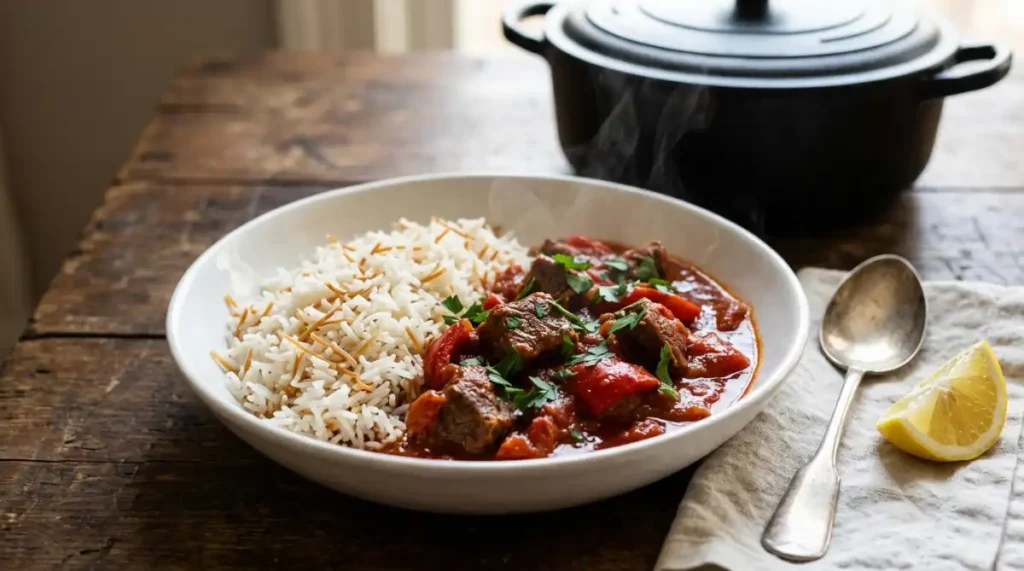
If you want a dinner that fills the whole house with warm, comforting aromas, this Lebanese beef stew is the one. Tender chunks of beef chuck are slowly simmered in a rich tomato sauce with onion, garlic, sweet red bell pepper and warm spices like cinnamon and baharat, then spooned over fluffy vermicelli rice. It is cozy, deeply flavored and made in one pot, with only a little hands-on time.
Lebanese beef stew, known in Arabic as yakhnet lahme, is the kind of home-style dinner that families make on a cool evening or for a Sunday gathering. The beef becomes fork tender, the sauce turns thick and glossy, and the buttery vermicelli rice soaks up every drop. In this guide you will find an easy step-by-step recipe, the best cut of beef, how to make perfect vermicelli rice, tips, mistakes to avoid, variations for the pressure cooker and slow cooker, and answers to common questions.

Lebanese beef stew with vermicelli rice: a cozy, comforting dinner.
If you are new to Middle Eastern cooking, this is a gentle place to start. None of the techniques are difficult: you brown meat, soften onions, add spices and let time do the work. The only part that asks for attention is the vermicelli, which browns quickly, and once you have made it once you will find it very easy. Many readers tell us this is the dish that turned them into confident stew makers, because the result tastes far more impressive than the effort involved.
Why You’ll Love This Lebanese Beef Stew
- It is deeply comforting. Fall-apart beef in a rich tomato sauce is exactly what a cozy dinner should be.
- The flavor is warm and layered. Baharat, cinnamon and bay leaf give the stew a gentle Middle Eastern spice without any heat.
- It is mostly hands-off. After 20 minutes of work, the stove does the rest.
- It uses simple ingredients. Beef, onion, tomatoes, a pepper and pantry spices.
- It is perfect for meal prep. It tastes even better the next day and freezes well.
- It feeds a crowd. The recipe serves 6 and is easy to double.
What Is Lebanese Beef Stew?
Lebanese cooking has a whole family of stews called yakhna, which means “stewed” in Arabic. They are usually made with meat, a tomato base and a seasonal vegetable such as green beans, okra, peas or bell pepper, and they are always served with rice. Beef yakhnet is one of the most popular, and many families make it every week.
What sets it apart is the spicing. Instead of chili heat, it is flavored with baharat, a warm spice blend that includes allspice, cinnamon and black pepper, along with a bay leaf and a cinnamon stick that perfume the sauce as it simmers. The stew is served over rice that is cooked with toasted vermicelli noodles, which adds a nutty, buttery flavor and a lovely texture.
The Best Beef for Lebanese Beef Stew
For a stew, tougher cuts with good marbling and connective tissue are best, because they become tender and rich after a long, gentle simmer. Lean cuts dry out.
| Cut | Result | Notes |
|---|---|---|
| Beef chuck | Tender, rich, juicy | Our top pick, affordable and widely available |
| Beef shank (boneless) | Very tender, gelatin-rich sauce | Needs a little longer to cook |
| Bone-in short rib | Extra rich and meaty | More expensive, remove bones before serving |
| Round or stew meat | Leaner, can be a bit dry | Works, but do not overcook |
Buy a whole piece of chuck roast and cut it yourself into 1½-inch cubes, if you can. Pre-cut stew meat is often a mix of random cuts and sizes, so it cooks unevenly.

Everything you need for Lebanese beef stew and vermicelli rice.
Ingredients for Lebanese Beef Stew
For the beef stew
- 2 lb (900 g) beef chuck, cut into 1½-inch cubes
- 2 tbsp olive oil or ghee
- 1 large yellow onion, finely diced
- 5 garlic cloves, minced
- 2 tbsp tomato paste
- 1 can (14 oz / 400 g) diced or crushed tomatoes
- 1½ tsp baharat (Lebanese seven spice)
- ½ tsp ground cumin
- 1 cinnamon stick
- 2 bay leaves
- 1½ tsp salt, plus more to taste
- ½ tsp black pepper
- 3 cups (720 ml) beef broth or water
- 1 large red bell pepper, cut into 1-inch pieces
- 1 tbsp fresh lemon juice
- 2 tbsp chopped fresh parsley, for serving
For the vermicelli rice
- 1½ cups (300 g) basmati or long grain rice
- ½ cup (50 g) vermicelli noodles, broken into short pieces
- 2 tbsp butter or ghee
- 2¼ cups (540 ml) water or broth
- 1 tsp salt
Ingredient Notes
- Baharat: This is the signature spice. Look for Lebanese seven spice at Middle Eastern markets or the spice aisle. If you cannot find it, mix ½ teaspoon each of allspice and cinnamon with ¼ teaspoon of black pepper and a pinch of nutmeg and cloves.
- Tomato paste: Cooking the paste for a couple of minutes deepens the flavor of the sauce and gives the stew its rich red color.
- Vermicelli: Use thin vermicelli or broken angel hair pasta if you cannot find the Middle Eastern kind. Break it into pieces about an inch long.
- Rice: Basmati gives the best light, separate grains. Rinse it well to remove extra starch.
- Broth: Low-sodium beef broth adds richness. Water works too, and the beef makes its own flavor as it simmers.
Equipment You’ll Need
- A large heavy-bottomed pot or cast iron Dutch oven (5 to 6 quarts)
- A medium saucepan with a tight-fitting lid for the rice
- A wooden spoon and a fork for fluffing the rice
- A sharp knife and cutting board
How to Make Lebanese Beef Stew
Step 1: Sear the Beef
Pat the beef cubes very dry with paper towels and season them with 1 teaspoon of the salt and the black pepper. Heat the oil in a large Dutch oven over medium-high heat until it shimmers. Add the beef in a single layer, working in two batches so the pot is not crowded, and sear for 2 to 3 minutes per side, until deeply browned. Move the browned beef to a plate.

Sear the beef in batches until it is deeply browned on all sides.
This browning step is where much of the flavor comes from. Crowding the pot makes the beef steam and turn gray, so be patient and do two batches.
Step 2: Cook the Onions, Garlic, Tomato Paste and Spices
Add the onion to the same pot, along with a splash of water if the bottom looks dry, and cook for 5 to 6 minutes, scraping up the browned bits, until soft and golden. Stir in the garlic and cook for 30 seconds. Add the tomato paste and cook for 2 minutes, stirring, until it darkens a shade. Stir in the baharat and cumin and cook for 30 seconds more, until fragrant, then return the beef to the pot.

Stir in the tomato paste and spices until they smell fragrant.
Step 3: Simmer the Stew
Pour in the diced tomatoes and the broth. Add the cinnamon stick, bay leaves and the remaining ½ teaspoon of salt. Bring the pot to a boil, then reduce the heat to low, cover with the lid slightly ajar and simmer for 1 hour to 1 hour 15 minutes, stirring now and then, until the beef is almost fork tender.
Add the red bell pepper, and simmer uncovered for another 20 to 25 minutes, until the beef is completely tender and the sauce has thickened and turned glossy. Remove the cinnamon stick and bay leaves, stir in the lemon juice and taste. Add more salt if needed.

Simmer gently until the beef is tender and the sauce is rich and glossy.
Step 4: Toast the Vermicelli
While the stew finishes, start the rice. Rinse the basmati in a bowl of cold water, swirling and draining, until the water runs mostly clear, then drain well. Melt the butter in a medium saucepan over medium heat. Add the broken vermicelli and cook, stirring constantly, for 2 to 3 minutes, until the noodles are a deep golden brown. Watch closely, since they go from golden to burnt very fast.

Toast the vermicelli in butter until it turns a deep golden brown.
Step 5: Cook the Rice
Stir the drained rice into the toasted vermicelli and cook for 1 minute so the grains are coated in butter. Pour in the water and add the salt. Bring to a boil, then reduce the heat to the lowest setting, cover tightly and cook for 15 minutes without lifting the lid. Remove from the heat, leave it covered for 10 minutes, then fluff with a fork.

Fluff the rice with a fork so the grains stay light and separate.
Step 6: Serve
Spoon the vermicelli rice into wide bowls and ladle the beef stew beside it or over the top. Sprinkle with fresh parsley and serve with a lemon wedge. Enjoy it hot, with extra sauce to spoon over the rice.

Fork-tender beef, rich tomato sauce and buttery rice in every spoonful.
Understanding the Flavors
Every part of this stew has a job. The beef supplies the savory depth, and the onion adds natural sweetness as it cooks down. Tomato paste and diced tomatoes bring body, color and a gentle tang. Baharat and cumin give warmth and aroma, the cinnamon stick adds a faint sweetness that is typical of Lebanese cooking, and the bay leaf rounds everything out. At the end, lemon juice lifts the flavors so the stew tastes bright rather than heavy.
The rice is not an afterthought either. Toasting the vermicelli in butter gives it a nutty, caramelized flavor, and that flavor flows into the rice as it steams. Together, the soft rice, the crisp-tender noodle pieces and the saucy beef create the contrast that makes this dish so satisfying.
How to Tell When the Stew Is Done
- The beef is tender. A cube should break apart easily when pressed with a spoon. If it still feels firm, keep simmering in 10-minute steps.
- The sauce is thick and glossy. It should coat the back of a spoon, with a little oil shining on top.
- The pepper is soft but intact. The pieces should hold their shape and not fall apart.
- It smells warm and spiced. The raw tomato smell should be gone, replaced by cinnamon and baharat.
Tips for the Best Lebanese Beef Stew
- Brown the beef well. A deep brown crust gives the stew its rich, savory base.
- Do not rush the simmer. Low and slow turns tough chuck into tender, juicy beef. Boiling hard makes it chewy.
- Add the bell pepper late. Added at the start, it turns to mush. Added in the last 20 minutes, it stays soft but holds its shape.
- Cook the tomato paste. Two minutes in the hot pot removes the raw taste and adds depth.
- Finish with lemon. A little acid at the end brightens the whole stew.
- Let it rest. After cooking, the stew thickens and the flavor improves if you leave it for 10 minutes before serving.
Common Mistakes to Avoid
- Skipping the sear. Without browning, the stew tastes flat.
- Using lean beef. Lean cuts turn dry and stringy. Choose chuck.
- Cutting the pieces too small. Small cubes fall apart during the long simmer. Aim for 1½ inches.
- Burning the vermicelli. It browns in seconds. Stir constantly and take it off the heat as soon as it is deep golden.
- Lifting the lid on the rice. It lets the steam escape and can leave the rice undercooked or mushy.
- Adding too much liquid. The stew should have a thick sauce, not a thin soup.
Variations and Ideas
- Pressure cooker: Brown the beef and sauté the aromatics on the sauté setting, add the liquid and cook on high pressure for 35 to 40 minutes. Release naturally, then add the pepper and simmer on sauté for a few minutes.
- Slow cooker: Brown the beef and onions first, then cook everything except the pepper on low for 7 to 8 hours. Add the pepper for the last hour.
- Lamb version: Use lamb shoulder instead of beef and reduce the simmer time by about 15 minutes.
- More vegetables: Add green beans, peas, carrots or potatoes for a heartier stew.
- A touch of tang: Stir in 1 teaspoon of pomegranate molasses at the end.
- Heat lovers: Add a pinch of Aleppo pepper or red pepper flakes.
Easy Substitutions
| Ingredient | Substitute |
|---|---|
| Beef chuck | Beef shank, short rib or lamb shoulder |
| Baharat | Allspice, cinnamon, cumin and black pepper blend |
| Diced tomatoes | Crushed tomatoes or 3 grated fresh tomatoes |
| Vermicelli | Broken angel hair pasta or orzo |
| Basmati rice | Long grain white rice |
| Butter | Ghee or olive oil |
Is Lebanese Beef Stew Healthy?
It can be a well-balanced dinner. Beef chuck is a good source of protein, iron and zinc, and the tomato sauce gives you vitamin C and lycopene, while the bell pepper adds fiber and color. Because the sauce is made with a modest amount of olive oil and no cream, it is lighter than many stews. To make it lighter still, trim visible fat from the beef before cooking, skim the oil from the top of the stew before serving, and serve a larger portion of salad on the side. Each serving of the stew with a cup of rice is roughly 520 calories, though the exact figure varies with your ingredients and portion size.
What to Serve With Lebanese Beef Stew
The stew and rice make a full meal, but a fresh side adds balance. A few ideas:
- Fattoush or a simple cucumber and tomato salad: Crisp, lemony and refreshing.
- Plain yogurt: A cool spoonful on the side is traditional.
- Warm pita bread: For scooping up the sauce.
- Pickles: Tangy pickled turnips or cucumbers cut through the richness.
- More rice ideas: See our 6 easy rice recipes for dinner.
- More dinner recipes: Try our easy dinner ideas, the creamy Marry Me Chicken, a garlic butter steak and potatoes skillet or these pizza dinner ideas.
Make-Ahead, Storage and Freezing
Make ahead: The stew tastes even better after a night in the fridge, as the spices have time to blend. Make it up to 3 days ahead and reheat gently on the stove.
Storing: Cool the stew and rice and store them in separate airtight containers in the fridge for up to 4 days.
Freezing: The stew freezes well for up to 3 months. Cool it completely, freeze it in portions and thaw overnight in the fridge. Cooked rice can also be frozen for up to a month.
Reheating: Warm the stew over medium-low heat with a splash of water or broth until bubbling. Reheat the rice in the microwave with a damp paper towel on top, or in a covered pan with a tablespoon of water.
Serving a Crowd
This recipe doubles easily in a large pot, and the stew is a wonderful dish for family gatherings. Serve the rice on a large platter with the stew spooned over the top, scatter parsley and toasted pine nuts or almonds over it, and set out yogurt, salad and warm bread on the side. Everyone can help themselves.
Scaling the Recipe Up or Down
To serve 3, cut every ingredient in half and use a smaller pot so the sauce does not evaporate too quickly. The simmer time stays about the same. To serve 12, double everything, brown the beef in three or four batches and use a very large pot, adding 10 to 15 minutes to the simmering time. Cook the rice in two separate pans rather than one very big one, since large amounts of rice cook unevenly. Whatever the size, check the beef for tenderness rather than going strictly by the clock, as every cut and every stove is a little different.
Frequently Asked Questions
What is Lebanese beef stew?
Lebanese beef stew, often called yakhnet lahme, is a slow-simmered stew of tender beef in a tomato-based sauce seasoned with warm spices such as baharat (Lebanese seven spice), cinnamon and bay leaf. It is traditionally served over rice cooked with toasted vermicelli noodles.
What is the best cut of beef for Lebanese beef stew?
Beef chuck is the best choice. It has plenty of connective tissue and fat that melt during a long, slow simmer and give you tender beef and a rich sauce. Beef shank, bone-in short rib and round also work, but lean cuts tend to dry out.
What is baharat and can I make it at home?
Baharat is a Middle Eastern spice blend, and Lebanese seven spice usually includes allspice, black pepper, cinnamon, cloves, cumin, coriander and nutmeg. If you cannot find it, mix ½ teaspoon each of allspice, cinnamon and cumin with ¼ teaspoon of black pepper and a pinch of nutmeg and cloves.
Can I make this stew in a pressure cooker or slow cooker?
Yes. In a pressure cooker, brown the beef and sauté the aromatics using the sauté setting, then cook on high pressure for 35 to 40 minutes with a natural release. In a slow cooker, brown the beef first, then cook everything except the bell pepper on low for 7 to 8 hours and add the pepper in the last hour.
How do I keep the vermicelli rice from getting mushy?
Rinse the basmati rice until the water runs clear, toast the vermicelli until golden brown, use a ratio of about 1½ cups of water for each cup of rice, and do not lift the lid while the rice cooks. Let the rice rest covered for 10 minutes, then fluff with a fork.
Can I make Lebanese beef stew ahead of time?
Yes, and it tastes even better the next day. Make the stew up to 3 days ahead and keep it in the fridge. Cook the rice fresh if you can, or reheat it with a splash of water.
How do I store and reheat leftovers?
Store the stew and rice in separate airtight containers in the fridge for up to 4 days. The stew freezes well for up to 3 months. Reheat the stew gently on the stove with a splash of water or broth, and warm the rice in the microwave with a damp paper towel on top.
Final Thoughts
This Lebanese beef stew is the kind of dinner that feels like a warm hug. The beef is meltingly tender, the tomato sauce is rich and gently spiced, and the buttery vermicelli rice makes every bite feel complete. It takes a little time, but most of it is hands-off, and the reward is a pot of comforting, deeply flavored food that you will want to make again and again. Serve it for your next family dinner and enjoy.


We’d Love to Hear From You!
Did you try this Lebanese beef stew? Tell us in the comments how it turned out and how you served it. We read every comment, and your tips might help other readers. If you enjoyed this cozy dinner recipe, save it on Pinterest for your next family dinner.