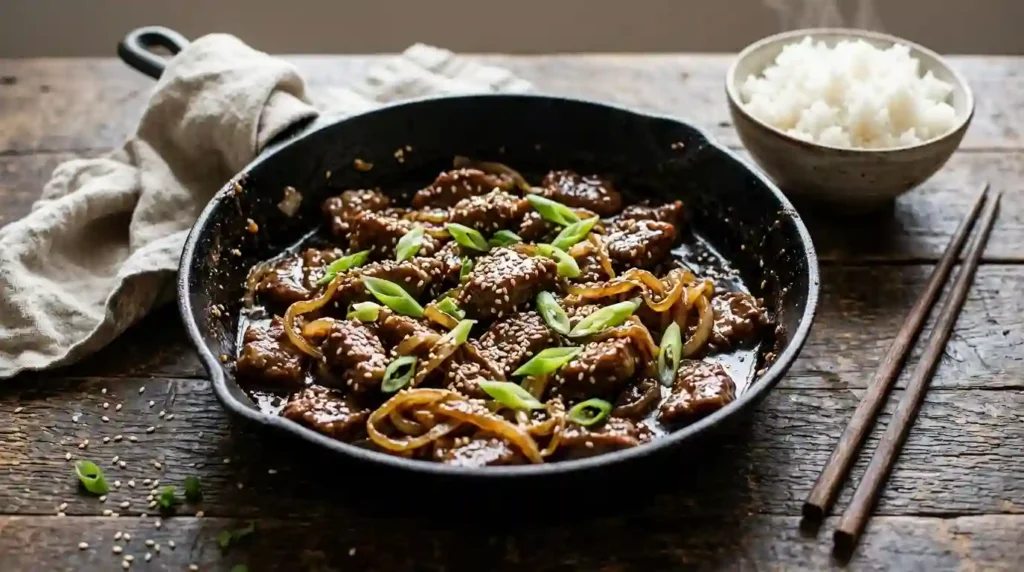
This Mongolian beef is sticky, savory, and full of sweet caramelized onions, and it is on the table in about 30 minutes. Thin slices of flank steak are seared until browned, then tossed with soft golden onions and a rich sauce of soy, hoisin, and brown sugar. It tastes like the dish you love from your favorite Chinese restaurant, only fresher and a lot cheaper.
The whole recipe cooks in one skillet, so cleanup is easy, and the ingredients are simple pantry staples. Serve it over steamed rice or noodles with a little green onion and sesame on top, and you have a dinner that works for busy weeknights and company alike.
Why You Will Love This Mongolian Beef Dinner Recipe
It is fast, easy, and uses one pan. The beef cooks in just a few minutes, the onions soften in the same skillet, and the sauce is mixed in a bowl and poured right in. There is no deep frying and no special equipment, just a hot pan and a few minutes of attention.
The flavor is bold and addictive. The beef gets crisp, caramelized edges, the onions turn sweet and tender, and the sauce is glossy, salty-sweet, and rich with garlic and ginger. A tiny pinch of red pepper flakes adds a gentle warmth that keeps every bite interesting.
A light cornstarch coat helps the beef brown and also thickens the sauce, so you get a sticky glaze without a separate slurry. Cooking the beef in batches keeps it crisp and juicy.
Slice the steak thin against the grain, and keep the heat high. If the pan is crowded, the beef steams instead of sears, so cook it in two batches.
What Is Mongolian Beef?
Mongolian beef is a Chinese-American restaurant dish, not a traditional dish from Mongolia. It is made of thinly sliced beef stir fried in a sweet and savory soy-based sauce, usually with green onions. This version adds plenty of sliced onions, which cook down into soft, sweet ribbons that soak up the sauce.
Ingredients

For the beef
- 1 1/2 lb flank steak, sliced thin against the grain
- 1/4 cup cornstarch
- 1/2 tsp salt
- 3 tbsp vegetable oil, divided
For the onions
- 2 large yellow onions, sliced into 1/4-inch half-moons
- 4 garlic cloves, minced
- 1 tbsp fresh ginger, grated
- 4 scallions, cut into 2-inch pieces
For the sauce
- 1/3 cup low-sodium soy sauce
- 2 tbsp hoisin sauce
- 2 tbsp oyster sauce
- 1/3 cup brown sugar
- 1/2 cup beef broth
- 1/2 tsp red pepper flakes
- 1 tsp sesame oil
To finish
- Toasted sesame seeds
- Extra sliced scallions
- Steamed rice, for serving
Step-by-Step Instructions
Step 1: Sear the beef

Pat the steak dry and toss it with the cornstarch and salt until each slice is lightly coated. Heat 2 tablespoons of the oil in a large cast iron skillet over high heat until it shimmers. Add half of the beef in a single layer and sear for 1 to 2 minutes per side until deeply browned. Move it to a plate and repeat with the rest.
Step 2: Cook the onions, garlic, and ginger

Add the remaining tablespoon of oil to the same pan and reduce the heat to medium-high. Cook the onions for 4 to 5 minutes, stirring, until soft and golden at the edges. Add the garlic, ginger, and scallion pieces and cook for 30 seconds until fragrant.
Step 3: Pour in the sauce

Whisk the soy sauce, hoisin, oyster sauce, brown sugar, beef broth, red pepper flakes, and sesame oil together in a bowl. Pour the sauce over the onions, scraping up the browned bits on the bottom of the pan, and simmer for 2 to 3 minutes until it begins to thicken.
Step 4: Toss the beef and sauce together

Return the beef and any juices on the plate to the pan. Toss for 1 to 2 minutes until the sauce is sticky and coats every slice. The cornstarch on the beef will thicken the sauce, so add a splash of broth if it gets too thick.
Step 5: Garnish and rest

Take the pan off the heat and sprinkle with the sesame seeds and extra scallions. Let it rest for 2 minutes so the sauce settles and clings to the beef.
Step 6: Serve

Spoon the beef and onions over hot steamed rice and spoon any extra sauce from the pan on top. Serve with steamed broccoli or a simple cucumber salad on the side.
Approximate Nutrition (Per Serving)
| Calories | about 490 (without rice) |
| Protein | 38 g |
| Carbohydrates | 33 g |
| Fat | 22 g |
| Saturated fat | 7 g |
| Fiber | 2 g |
| Sodium | about 1,350 mg |
Nutrition values are estimates and vary with the brands and ingredients you use.
Tips for the Best Mongolian Beef
- Freeze the steak for 15 minutes before slicing, so it is firm and easy to cut into thin slices.
- Slice against the grain, across the visible lines in the meat, for the most tender bites.
- Use a very hot pan and do not crowd it, so the beef browns instead of steaming.
- Use low-sodium soy sauce so you can control the saltiness, since hoisin and oyster sauce are salty too.
- Let the onions get golden at the edges for the deepest, sweetest flavor.
- Mix the sauce before you start cooking, because the stir fry moves fast.
Variations to Try
- Spicy: Add 1 to 2 teaspoons of chili garlic sauce or a few dried red chilies.
- Extra veggies: Add sliced bell peppers or broccoli florets with the onions.
- Chicken or pork: Swap the steak for thin slices of chicken thigh or pork loin.
- Gluten free: Use tamari and a gluten-free hoisin and oyster sauce.
- Lower sugar: Use 1/4 cup brown sugar instead of 1/3 cup.
What to Serve With Mongolian Beef
Steamed white or jasmine rice is the classic choice, because it soaks up all of the sticky sauce. Fried rice, lo mein noodles, or cauliflower rice also work well. For a vegetable side, try steamed broccoli, garlic green beans, or sautéed bok choy. A cold cucumber salad with rice vinegar is a refreshing contrast to the rich sauce.
Common Mistakes to Avoid
- Cutting the beef too thick: Thick slices turn chewy, so keep them about 1/8 inch thin.
- Crowding the pan: Too much beef at once lowers the heat and steams the meat.
- Overcooking the beef: It finishes in the sauce, so remove it from the pan as soon as it is browned.
- Letting the sauce boil too long: It can become thick and salty, so simmer it just until glossy.
Storage and Reheating
Store leftovers in an airtight container in the fridge for up to 4 days. Reheat in a hot skillet with a splash of water or beef broth, stirring until the sauce is glossy again. The beef also freezes well for up to 2 months, so thaw it overnight in the fridge before reheating. You can slice the beef and onions and mix the sauce a day ahead to make weeknight cooking even faster.
Shopping List by Aisle
🥩 Meat: Flank steak (1 1/2 lb)
🥬 Produce: Yellow onions, garlic, fresh ginger, scallions
🥫 Asian Aisle and Pantry: Low-sodium soy sauce, hoisin sauce, oyster sauce, toasted sesame oil, beef broth, brown sugar, cornstarch, vegetable oil
🌶️ Spices: Red pepper flakes, salt, sesame seeds
🍚 Grains: White or jasmine rice
Tired of Deciding What’s for Dinner?
Get a done-for-you weekly meal plan with easy recipes and shopping lists, so dinner is never stressful again. 👉 [your referral link]
Frequently Asked Questions
What is the best cut of beef for Mongolian beef?
Flank steak is the classic choice because it is lean, flavorful, and tender when sliced thin against the grain. Sirloin and skirt steak also work well.
How do I get the beef crispy without deep frying?
Coat the slices lightly in cornstarch and sear them in a hot skillet in two batches. The cornstarch helps the beef brown and crisp at the edges without a lot of oil.
Can I make Mongolian beef ahead of time?
Yes. Slice the beef and onions and mix the sauce up to a day ahead and keep them in the fridge. The cooked dish also reheats well in a skillet with a splash of broth.
Why is my sauce too salty or too thick?
Use low-sodium soy sauce and do not simmer the sauce for too long. If it is too thick, stir in a splash of beef broth or water. If it is too salty, add a little more broth and a pinch of sugar.
Final Thoughts
This Mongolian beef dinner recipe is quick, sticky, and full of sweet onions, and it beats takeout every time. It is easy to make with a single pan and simple ingredients, and it is just as good the next day. Once you try it, it will become a regular in your dinner rotation.
Save this recipe for later, and tell us how yours turned out in the comments. Happy cooking!