Chicken Pot Pie Pasta (Cozy Comfort in a Bowl)

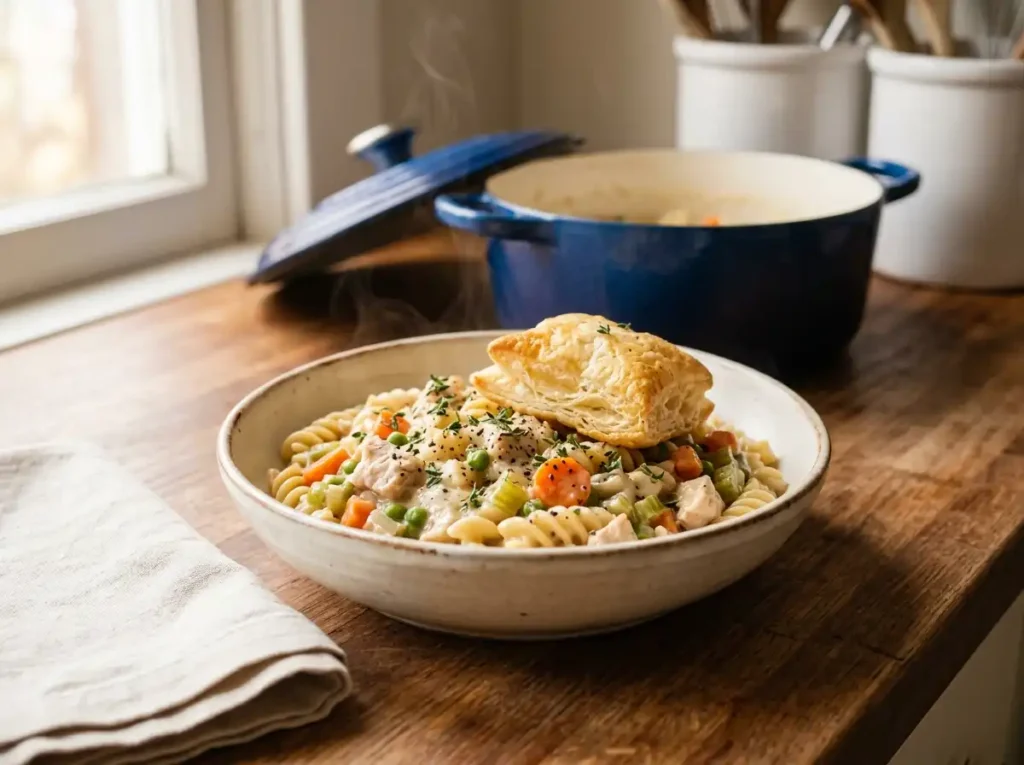
Chicken pot pie is one of those dishes that manages to feel both nostalgic and indulgent at the same time, but between making a crust and waiting for it to bake, it’s not exactly a weeknight kind of recipe. This pasta version takes everything that makes pot pie so comforting, the tender chicken, the sweet carrots and celery, the thick, creamy sauce, and turns it into something you can have on the table in under an hour, all in one pot. Small pasta shells stand in for the flaky crust, simmering right in the sauce so they soak up all that flavor instead of sitting on the side. If you want to lean even further into the pot pie feel, a single puff pastry crouton baked separately and set on top of each bowl brings back that familiar crunch without the extra effort of a full crust. It’s the kind of dinner that tastes like it took all afternoon, even though most of it comes together while you’re standing at the stove.
Why It Works
- Searing the chicken first and building the roux in the same pot means every layer of flavor, the browned bits from the chicken, the sweetness of the sautéed vegetables, carries through into the final sauce instead of getting lost.
- Cooking the pasta directly in the sauce rather than boiling it separately lets the shells absorb broth and seasoning as they cook, so the starch they release also helps thicken the sauce a little further.
- This is genuinely a one-pot dinner, chicken, vegetables, sauce, and pasta all happen in the same Dutch oven, which means less cleanup and less multitasking at the stove.
- Adding the peas frozen rather than thawed keeps them from turning mushy or dull, and they cook through perfectly just from the residual heat of the simmering sauce.
Worth Knowing
- Cook the flour into the butter for at least a full minute before adding liquid. Skipping this step or rushing it is the most common reason a roux-based sauce ends up tasting starchy or pasty instead of smooth.
- The sauce will continue to thicken as it sits, even off the heat, so if you’re planning to serve this a little later, keep a bit of extra broth on hand to loosen it back up right before serving.
- Small pasta shapes work best here, shells, small elbows, or ditalini, since they hold onto the thick sauce without getting lost in it the way a long noodle would.
- If you’re making the puff pastry crouton topping, bake it separately on a sheet pan rather than directly on the pasta, otherwise it absorbs moisture from the sauce and loses its crispness almost immediately.
Ingredients
- 2 chicken breasts, diced
- 2 tbsp butter, plus more for the roux
- 2 carrots, diced
- 2 celery stalks, diced
- 1 onion, diced
- 1/3 cup flour
- 3 cups chicken broth
- 1 cup milk
- 1 cup frozen peas
- 2 cups small pasta shells
- Fresh thyme, for garnish
- 1 sheet puff pastry, baked into croutons (optional)
- Salt and pepper to taste
Step-by-Step Instructions

Sear the Chicken
Start by heating a little butter or oil in a Dutch oven over medium-high heat. Add the diced chicken in a single layer, giving it room to actually brown rather than steam, and let it sear for 4 to 5 minutes, stirring only occasionally. You’re not trying to cook it all the way through yet, just build a little color on the outside, since that browning is where a good amount of the dish’s flavor comes from. Once it’s golden on most sides, scoop it out onto a plate and set it aside, leaving whatever fat and browned bits are left behind in the pot.

Sauté the Vegetables
In that same pot, with all those flavorful bits still clinging to the bottom, add the diced carrots, celery, and onion. This classic trio, often called a mirepoix, is the backbone of a good pot pie flavor. Cook it over medium heat for about 6 to 8 minutes, stirring occasionally, until the onion turns soft and translucent and the carrots start to lose their raw bite. The vegetables will pick up some of that browned chicken flavor left in the pot, which is exactly what you want.

Build the Roux
Push the vegetables to one side and add a few tablespoons of butter to the empty space, letting it melt completely. Sprinkle the flour over the butter and stir constantly for about a minute, working it into a thick, pale golden paste that coats the vegetables as you mix everything together. Cooking the flour briefly like this gets rid of that raw, pasty taste it can have if it goes straight into liquid, and it’s what gives the final sauce its body.

Pour in the Broth and Milk
Slowly pour in the chicken broth first, whisking as you go to smooth out any lumps from the roux, then add the milk. Bring everything up to a gentle simmer, stirring fairly often so nothing catches on the bottom of the pot. Over the next several minutes, you’ll watch the sauce transform from thin and watery to noticeably thick enough to coat the back of a spoon, which is your cue that the roux has done its job.

Add the Chicken and Peas
Return the seared chicken to the pot along with the frozen peas, stirring to distribute everything evenly through the thickened sauce. There’s no need to thaw the peas first, they’ll heat through quickly once they’re in the simmering liquid, and adding them frozen actually helps keep their color bright rather than dull and washed out. Let everything simmer together for a few minutes so the chicken finishes cooking through.

Stir in the Pasta
Add the small pasta shells directly into the pot with the sauce, chicken, and vegetables, along with an extra splash of broth or milk if the mixture looks like it’s getting too thick to fully submerge the pasta. Cover and let it simmer, stirring occasionally, until the pasta is tender, which usually takes about 10 to 12 minutes depending on the shape you’re using. Cooking the pasta right in the sauce like this means it absorbs flavor as it cooks instead of just sitting in a separately boiled pot.

Let It Simmer Together
Once the pasta is tender, give everything a final stir and take a look at the consistency. It should be thick, almost stew-like, with the sauce clinging to the pasta, chicken, and vegetables rather than pooling loosely around them. If it’s thicker than you’d like, a splash of extra broth loosens it right up. Taste and adjust the salt and pepper here, since the flavor really comes together in this last stretch of simmering.
Plate and Serve
Ladle the pasta into bowls and, if you’re using the puff pastry crouton topping, set a piece on top of each serving so it stays crisp instead of getting soggy in the sauce. Finish with a sprinkle of fresh thyme and a crack of black pepper. Serve it right away while it’s hot and the sauce is at its thickest, this is the kind of dish that tastes like it’s been simmering all afternoon, even though most of the work happens in about 40 minutes.
Frequently Asked Questions
Can I use rotisserie chicken instead of searing my own?
Yes, shredded rotisserie chicken is a great shortcut here. Since it’s already cooked, stir it in at the same point you’d add the peas, just long enough to warm it through without overcooking it further.
Why did my sauce turn out lumpy?
This usually happens when the broth is added too quickly or all at once. Pour it in gradually while whisking constantly, giving the roux time to smoothly absorb the liquid rather than seizing up into clumps.
Can I make this ahead of time?
The base without the pasta can be made a day ahead and stored in the fridge, then reheated and simmered with the pasta added fresh before serving. If the pasta is already stirred in, it will continue to absorb liquid as it sits, so expect to loosen it with extra broth when reheating.
How long does this keep in the fridge?
Stored in an airtight container, it keeps well for about 3 days. Reheat gently on the stove over low heat, stirring in a splash of broth or milk to bring the sauce back to its original consistency.
Want a Full Week of Meals Planned Out for You?
Grab our Weekly Meal Plan and take the guesswork out of dinner, with easy recipes, shopping lists, and prep tips delivered straight to your inbox.
Get the Meal Plan