10+ Spicy Chicken Pasta Recipes
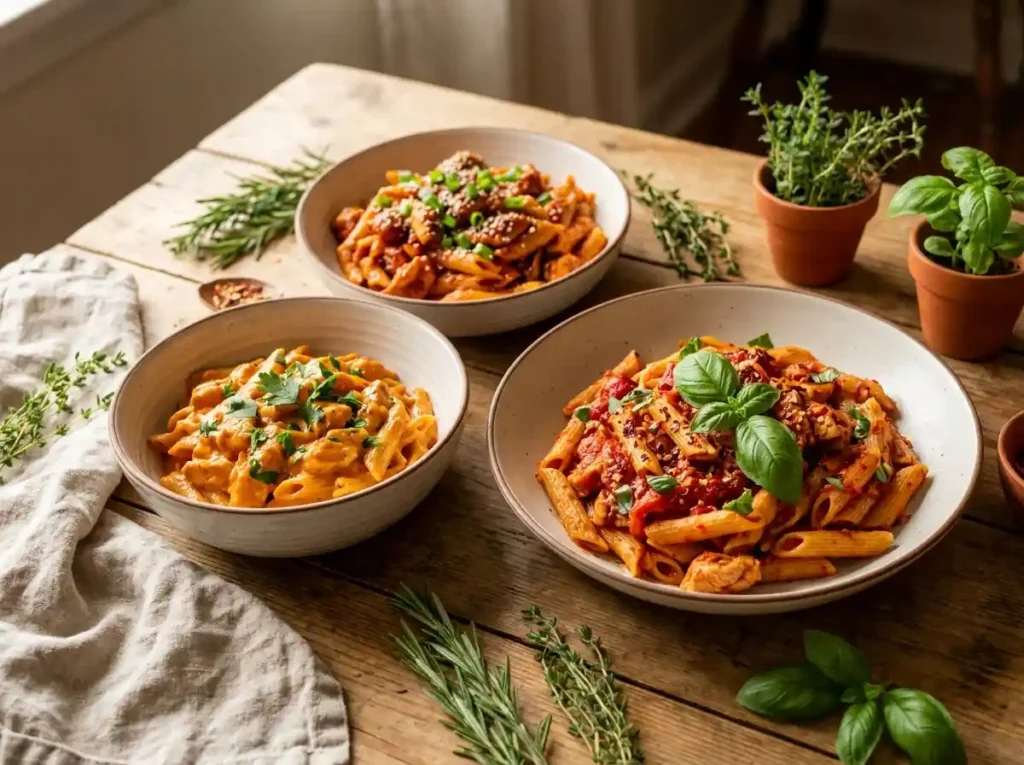
Spicy chicken pasta means something different depending on where you’re pulling flavor from, and this collection of 12 recipes leans into that range rather than sticking to one style of heat. Italian arrabbiata and vodka sauce sit alongside Korean gochujang, Caribbean jerk, Portuguese peri-peri, and Indian tikka masala, all built around the same basic idea: seared or shredded chicken, a bold sauce, and a pasta shape that can hold onto it.
Some of these are genuinely fiery, like the Nashville hot and diavolo versions, while others bring warmth and complexity without overwhelming heat, like the harissa or tikka masala recipes. Each one includes a full ingredient list, step-by-step instructions, estimated nutrition per serving, and two sections worth reading before you start — Why It Works, covering the technique choices that actually matter, and Worth Knowing, covering substitutions and heat-level adjustments. A shopping list and answers to common questions are near the end.
Shopping List
A consolidated list covering ingredients across all 12 recipes. Pick and choose based on which dishes you’re actually making — you won’t need everything here at once.
- Pasta shapes: penne, rotini, spaghetti, fusilli, rice noodles
- Proteins: chicken breast, ground chicken, rotisserie chicken, bacon
- Dairy: heavy cream, cream cheese, parmesan, cheddar, blue cheese, plain yogurt, butter
- Spicy pastes & sauces: harissa, gochujang, jerk seasoning, peri-peri sauce, buffalo sauce, hot sauce, garam masala, red chili flakes, cayenne pepper
- Produce: garlic, fresh basil, Thai basil, fresh cilantro, fresh parsley, fresh thyme, jalapeños, red chilies, scallions, lemons
- Pantry: crushed tomatoes, tomato paste, tomato sauce, vodka, fish sauce, soy sauce, sesame seeds, breadcrumbs, buttermilk, flour, chicken broth
1. Spicy Arrabbiata Chicken Pasta

Arrabbiata means angry in Italian, and this sauce earns the name honestly. Diced chicken gets tossed with penne in a fiery tomato sauce loaded with red chili flakes, finished with a scattering of fresh basil to cut through the heat just slightly.
This is one of the more straightforward recipes on this list, relying on good tomatoes and a heavy hand with the chili rather than a long ingredient list.
Why It Works
- Blooming the chili flakes in olive oil before adding the tomatoes releases more of their heat and flavor than stirring them in raw at the end.
- Searing the chicken first and setting it aside, rather than simmering it in the sauce from the start, keeps it from overcooking while the sauce reduces.
- A pinch of sugar balances the tomatoes’ acidity, which matters more here than in a milder sauce since the chili can make raw acidity taste sharper than it otherwise would.
Worth Knowing
- This sauce gets spicier the longer it simmers, so it’s worth tasting and adjusting the chili flake amount partway through rather than dumping it all in at the start.
- San Marzano tomatoes, if you can find them, make a noticeably smoother sauce than standard canned tomatoes.
- This dish reheats well, and the heat actually mellows out a bit by the next day, which some people prefer.
Ingredients
- 12 oz penne pasta
- 1 lb chicken breast, diced
- 3 tbsp olive oil
- 4 cloves garlic, minced
- 1 to 2 tsp red chili flakes
- 1 (28 oz) can crushed tomatoes
- 1/2 tsp sugar
- Salt to taste
- Fresh basil, torn
Instructions
- Cook the penne in salted boiling water until al dente, then drain.
- Season the chicken with salt and sear in 1 tablespoon of olive oil until browned through, then set aside.
- In the same pan, heat the remaining olive oil and bloom the garlic and chili flakes for 30 seconds.
- Add the crushed tomatoes and sugar, and simmer for 15 minutes.
- Return the chicken to the sauce and simmer for another 5 minutes.
- Toss with the pasta and top with fresh basil.
2. Vodka Sauce Spicy Chicken Pasta

This one softens the heat of a straight arrabbiata with cream, turning it into the pink, velvety vodka sauce most people already love, but with enough chili flake to keep things interesting. Diced chicken and penne round it out into a full meal.
The vodka itself doesn’t make the dish taste boozy — it helps release flavors from the tomatoes that water and oil alone can’t pull out, and it cooks off well before serving.
Why It Works
- Adding the vodka to the tomato paste before the cream goes in and letting it simmer for a couple of minutes cooks off the alcohol while keeping its flavor-releasing effect on the tomatoes.
- Stirring the cream in off the heat, or over very low heat, prevents it from curdling against the acidic tomato base.
- The chili flakes are added early, with the tomato paste, so their heat mellows and blends into the sauce rather than sitting sharply on top.
Worth Knowing
- The vodka isn’t strictly necessary if you’d rather skip it — a splash of white wine or even a bit of extra broth gets you most of the way there, just with a slightly different depth of flavor.
- This sauce can break if boiled too hard after the cream goes in, so keeping the heat gentle from that point on is worth remembering.
- This is one of the richer recipes on this list, so smaller portions alongside a simple green salad help balance a meal.
Ingredients
- 12 oz penne pasta
- 1 lb chicken breast, diced
- 2 tbsp olive oil
- 3 cloves garlic, minced
- 1 tsp red chili flakes
- 1/4 cup tomato paste
- 1/4 cup vodka
- 1 cup heavy cream
- 1/2 cup grated parmesan
- Fresh basil, torn
Instructions
- Cook the penne in salted boiling water until al dente, then drain.
- Season the chicken with salt and sear in olive oil until browned through, then set aside.
- In the same pan, sauté the garlic and chili flakes for 30 seconds, then stir in the tomato paste and cook for 1 minute.
- Add the vodka and simmer for 2 minutes to cook off the alcohol.
- Stir in the heavy cream and simmer gently until slightly thickened, then return the chicken to the pan.
- Toss with the pasta and parmesan, and top with fresh basil.
3. Nashville Hot Chicken Pasta

This one borrows the deep red, cayenne-forward glaze from Nashville hot chicken and pours it over crispy fried chicken pieces tossed with rotini, then finishes with a creamy drizzle to cool things down slightly.
It’s genuinely spicy, closer to the original Nashville style than most of the milder recipes on this list, so it’s worth knowing what you’re signing up for.
Why It Works
- Frying the chicken until deeply golden before glazing it, rather than glazing it earlier, keeps the coating crisp longer once the hot oil-based sauce goes on.
- Brushing the hot sauce glaze onto the fried chicken while it’s still hot helps it adhere evenly instead of sliding off.
- A cooling dressing drizzled over the top, similar to how Nashville hot chicken is traditionally served on white bread with pickles, balances the intense cayenne heat.
Worth Knowing
- This is one of the spicier recipes on this list, using a genuine Nashville-style cayenne oil glaze rather than a milder hot sauce, so it’s worth adjusting the cayenne to taste if you’re not used to that level of heat.
- Chicken thighs work as well as breast here and tend to stay juicier through the frying process.
- This dish is best assembled just before eating, since the crispy coating softens if it sits too long under the sauce and dressing.
Ingredients
- 12 oz rotini pasta
- 1 lb chicken breast, cut into strips
- 1 cup buttermilk
- 1 cup flour
- Oil for frying
- 1/4 cup hot sauce
- 2 tbsp cayenne pepper
- 2 tbsp melted butter
- 1/2 cup ranch or creamy dressing
Instructions
- Cook the rotini in salted boiling water until al dente, then drain.
- Soak the chicken strips in buttermilk for at least 15 minutes, then dredge in flour.
- Fry the chicken in hot oil until golden and cooked through, then drain on paper towels.
- Whisk together the hot sauce, cayenne, and melted butter to make the glaze.
- Toss the fried chicken in the glaze while still hot.
- Combine the pasta and glazed chicken in a bowl, drizzling with ranch or creamy dressing before serving.
4. Thai Basil Chicken Pasta

This one steps away from Italian flavors entirely, tossing rice noodles with ground chicken, fresh Thai basil, and sliced red chilies in a glossy, savory sauce built on fish sauce and soy. It’s closer to a stir-fry than a traditional pasta dish, but the noodle format still fits the spirit of this list.
Thai basil has a slightly spicier, more anise-like flavor than regular basil, and it’s worth seeking out specifically if you want this to taste like the dish it’s based on.
Why It Works
- Cooking the ground chicken over high heat in a wok or wide skillet, rather than a smaller pot, lets excess moisture evaporate quickly so the meat browns instead of steaming.
- Adding the Thai basil at the very end, off the heat, keeps its flavor and aroma from cooking off, which happens quickly with delicate herbs exposed to high heat.
- Balancing fish sauce, soy sauce, and a touch of sugar is the real backbone of this dish’s flavor, so it’s worth tasting and adjusting before adding the noodles.
Worth Knowing
- Regular basil works in a pinch if Thai basil isn’t available, though the flavor will taste noticeably milder and less distinctive.
- This dish comes together very quickly once you start cooking, so it’s worth having all the ingredients prepped and within reach before you turn on the heat.
- Ground turkey or pork can substitute for chicken here without changing the technique at all.
Ingredients
- 12 oz rice noodles
- 1 lb ground chicken
- 2 tbsp vegetable oil
- 4 cloves garlic, minced
- 2 to 3 red chilies, sliced
- 3 tbsp fish sauce
- 2 tbsp soy sauce
- 1 tbsp sugar
- 1 cup fresh Thai basil leaves
Instructions
- Cook the rice noodles according to package instructions, then drain and set aside.
- Heat the oil in a wok or wide skillet over high heat. Add the garlic and chilies, cooking for 30 seconds until fragrant.
- Add the ground chicken and cook until browned, breaking it up as it cooks.
- Stir in the fish sauce, soy sauce, and sugar.
- Add the cooked noodles and toss to combine.
- Remove from heat and stir in the Thai basil just before serving.
5. Harissa Chicken Pasta

Harissa, the North African chili paste, brings a smoky, complex heat to this dish that’s different from the straightforward chili-flake spiciness elsewhere on this list. Diced chicken and fusilli get coated in a deep red harissa sauce, finished with fresh cilantro.
This one has more going on flavor-wise than most, since harissa itself is already a blend of roasted peppers, garlic, and warm spices rather than just heat for its own sake.
Why It Works
- Cooking the harissa paste briefly in oil before adding any liquid, similar to blooming a spice, intensifies its flavor rather than leaving it tasting raw and one-dimensional.
- Thinning the harissa with a bit of the pasta cooking water rather than more oil keeps the sauce from becoming too heavy while still coating the pasta evenly.
- A squeeze of lemon at the end brightens the smoky depth of the harissa, which can otherwise taste a little flat without some acidity.
Worth Knowing
- Harissa varies significantly in heat between brands, so it’s worth tasting a small amount before committing to the full quantity called for in the recipe.
- Rose harissa, a milder floral variety, is a good option if you want the flavor without as much heat.
- This dish is naturally dairy-free as written, making it an easy option for a mixed group with different dietary needs.
Ingredients
- 12 oz fusilli pasta
- 1 lb chicken breast, diced
- 3 tbsp olive oil, divided
- 3 tbsp harissa paste
- 1/2 cup chicken broth
- 1 tbsp lemon juice
- Fresh cilantro, chopped
Instructions
- Cook the fusilli in salted boiling water until al dente, reserving 1/2 cup of the pasta water, then drain.
- Season the chicken with salt and sear in 1 tablespoon of olive oil until browned through, then set aside.
- In the same pan, heat the remaining olive oil and cook the harissa paste for 1 minute.
- Add the chicken broth and reserved pasta water, stirring to combine.
- Return the chicken to the pan and simmer for a few minutes.
- Toss with the pasta, finish with lemon juice, and top with fresh cilantro.
6. Gochujang Chicken Pasta

Gochujang, the fermented Korean chili paste, gives this dish a sweet, savory heat that’s different from most chili-based sauces. Diced chicken and spaghetti get tossed in a glossy reddish-orange sauce, finished with sesame seeds and scallions.
The fermented depth of gochujang means this dish tastes more complex than its short ingredient list suggests, closer to a Korean-Italian fusion than a straightforward spicy pasta.
Why It Works
- Cooking the gochujang briefly with garlic and a touch of oil before adding liquid deepens its flavor rather than leaving it tasting sharp and one-note.
- Balancing the gochujang with a bit of honey or sugar rounds out its fermented tang, since it can taste overly sharp without some sweetness to offset it.
- Toasting the sesame seeds before sprinkling them on top brings out more of their nutty flavor than using them straight from the jar.
Worth Knowing
- Gochujang varies in heat level between brands, with some labeled mild and others quite spicy, so it’s worth checking the label if heat level matters to you.
- This sauce thickens as it cools, so a splash of the reserved pasta water when reheating leftovers helps loosen it back up.
- Toasted sesame oil, if you have it, is a good finishing touch stirred in at the very end for extra depth.
Ingredients
- 12 oz spaghetti
- 1 lb chicken breast, diced
- 2 tbsp vegetable oil
- 3 cloves garlic, minced
- 3 tbsp gochujang
- 1 tbsp honey
- 1/2 cup chicken broth
- 1 tbsp sesame seeds, toasted
- 2 scallions, sliced
Instructions
- Cook the spaghetti in salted boiling water until al dente, then drain.
- Season the chicken with salt and sear in the vegetable oil until browned through, then set aside.
- In the same pan, sauté the garlic for 30 seconds, then stir in the gochujang and honey, cooking for 1 minute.
- Add the chicken broth, stirring to combine into a smooth sauce.
- Return the chicken to the pan and simmer for a few minutes.
- Toss with the pasta and top with toasted sesame seeds and scallions.
7. Jerk Chicken Pasta

Jerk seasoning brings warm, complex heat from Scotch bonnet peppers, allspice, and thyme, coating chicken pieces before they’re seared and tossed with penne in a creamy sauce. It’s warmly spiced rather than just hot, with a distinct Caribbean character.
This one works especially well if you already have jerk seasoning on hand and want to use it beyond the usual grilled chicken or pork applications.
Why It Works
- Marinating the chicken in jerk seasoning for at least 30 minutes, rather than seasoning it right before cooking, lets the complex spice blend actually penetrate the meat instead of just coating the surface.
- Searing the marinated chicken in a hot pan develops a char that plays well against the eventual creamy sauce, similar to how blackened chicken works in other recipes on this list.
- Fresh thyme, a key component of authentic jerk seasoning, added at the end keeps its aromatic quality intact rather than cooking off.
Worth Knowing
- Scotch bonnet peppers, if you want to make your own jerk paste, are significantly hotter than jalapeños, so a little goes a long way.
- Store-bought jerk seasoning or marinade works well here and saves considerable time compared to making a paste from scratch.
- This dish’s heat level varies enormously by brand of jerk seasoning used, so it’s worth tasting the marinade before committing to a full batch.
Ingredients
- 12 oz penne pasta
- 1 lb chicken breast, cut into pieces
- 3 tbsp jerk seasoning or marinade
- 1 tbsp olive oil
- 1 cup heavy cream
- 1/2 cup chicken broth
- Fresh thyme leaves
Instructions
- Marinate the chicken in the jerk seasoning for at least 30 minutes.
- Cook the penne in salted boiling water until al dente, then drain.
- Sear the marinated chicken in olive oil over medium-high heat until charred and cooked through, then set aside.
- In the same pan, add the heavy cream and chicken broth, scraping up any browned bits, and simmer for a few minutes.
- Return the chicken to the sauce.
- Toss with the pasta and finish with fresh thyme.
8. Peri-Peri Chicken Pasta

Peri-peri sauce, the Portuguese-African chili sauce made famous by grilled chicken chains, brings a tangy, garlicky heat to this dish. Grilled chicken pieces get tossed with rotini in a fiery orange-red sauce, finished with fresh parsley.
The lemon and vinegar in a good peri-peri sauce keep this from tasting one-dimensionally spicy, giving it a brighter character than some of the richer, creamier recipes on this list.
Why It Works
- Grilling the chicken rather than pan-searing it adds a smokiness that complements peri-peri’s own charred-pepper flavor profile.
- Marinating the chicken in a portion of the peri-peri sauce before grilling, then tossing it in more sauce afterward, layers the flavor more than adding sauce only at the end.
- The acidity from lemon and vinegar in peri-peri sauce means this dish needs less additional seasoning than most, since the sauce itself is already well-balanced.
Worth Knowing
- Store-bought peri-peri sauce varies widely in heat, so it’s worth checking whether you’re buying a mild, medium, or hot version before cooking.
- A stovetop grill pan works nearly as well as an outdoor grill if that’s not available.
- This is one of the lighter recipes on this list in terms of fat, since it isn’t cream-based, making it a good contrast if serving alongside richer dishes.
Ingredients
- 12 oz rotini pasta
- 1 lb chicken breast
- 1/2 cup peri-peri sauce, divided
- 1 tbsp olive oil
- Fresh parsley, chopped
Instructions
- Marinate the chicken in half the peri-peri sauce for at least 20 minutes.
- Cook the rotini in salted boiling water until al dente, then drain.
- Grill the chicken over medium-high heat until charred and cooked through, then let rest and slice.
- Toss the cooked pasta with the remaining peri-peri sauce and olive oil.
- Add the sliced chicken to the pasta.
- Top with fresh parsley before serving.
9. Chicken Diavolo Pasta

Diavolo, meaning devil in Italian, is a bold, tomato-based sauce built around a generous amount of red pepper flakes. Seared chicken and penne get coated in this fiery sauce, which sits somewhere between arrabbiata and a straightforward marinara with extra heat.
This recipe leans harder into raw chili heat than the arrabbiata version earlier on this list, making it a good pick if you want maximum spice without reaching for a different chili altogether.
Why It Works
- Using a generous, unapologetic amount of red pepper flakes rather than holding back is really the entire point of a diavolo sauce, so it’s not the place to be shy with the spice.
- Simmering the sauce longer than a quick marinara, closer to 20 minutes, lets the tomatoes reduce and concentrate alongside the chili flakes.
- Searing the chicken separately and adding it toward the end keeps it from turning tough during the sauce’s longer simmer time.
Worth Knowing
- This is one of the spicier tomato-based recipes on this list, so it’s worth having something cooling, like garlic bread with butter, on the side to balance the heat.
- The sauce’s heat mellows somewhat by the next day, so leftovers taste slightly less fiery than when freshly made.
- A splash of cream stirred in at the end, off the heat, is a common variation if you want to soften the sauce’s intensity without losing the diavolo character entirely.
Ingredients
- 12 oz penne pasta
- 1 lb chicken breast, diced
- 3 tbsp olive oil
- 4 cloves garlic, minced
- 2 tsp red pepper flakes
- 1 (28 oz) can crushed tomatoes
- Salt to taste
- Fresh parsley, chopped
Instructions
- Cook the penne in salted boiling water until al dente, then drain.
- Season the chicken with salt and sear in 1 tablespoon of olive oil until browned through, then set aside.
- In the same pan, heat the remaining olive oil and cook the garlic and red pepper flakes for 30 seconds.
- Add the crushed tomatoes and simmer for 20 minutes.
- Return the chicken to the sauce and simmer for another 5 minutes.
- Toss with the pasta and top with fresh parsley.
10. Buffalo Chicken Pasta (Hot Skillet Version)

This is the warm, skillet version of the buffalo chicken flavor combination that shows up cold in a few of the pasta salad roundups on this site. Shredded buffalo chicken gets tossed with rotini in a creamy orange buffalo sauce, drizzled with ranch and topped with blue cheese.
Making it hot rather than cold changes the character quite a bit — the sauce clings more richly to the pasta, and it feels more like a main course than a side dish.
Why It Works
- Poaching or baking the chicken plain and shredding it, rather than using pre-cooked chicken with its own seasoning, lets the buffalo sauce be the dominant flavor without competing with anything else.
- Building the sauce with butter and buffalo sauce together, similar to classic wing sauce, gives a richer, glossier coating than buffalo sauce alone.
- Adding a bit of cream cheese to the sauce thickens it and mellows the vinegar tang of the buffalo sauce, keeping it from tasting too sharp.
Worth Knowing
- This is one of the richer, more indulgent recipes on this list, so it works well served in smaller portions alongside something lighter.
- Rotisserie chicken, shredded and warmed through in the sauce, is a fast shortcut that works nearly as well as poaching chicken from scratch.
- Blue cheese crumbles are traditional here, but shredded cheddar is a milder substitute if blue cheese isn’t to your taste.
Ingredients
- 12 oz rotini pasta
- 2 cups shredded cooked chicken
- 2 tbsp butter
- 1/2 cup buffalo sauce
- 2 oz cream cheese
- 1/2 cup ranch dressing
- 1/4 cup crumbled blue cheese
Instructions
- Cook the rotini in salted boiling water until al dente, then drain.
- Melt the butter in a skillet over medium heat, then stir in the buffalo sauce and cream cheese until smooth.
- Add the shredded chicken and stir to coat, warming through for a few minutes.
- Toss the pasta into the skillet, coating it in the sauce.
- Drizzle with ranch dressing.
- Top with crumbled blue cheese before serving.
11. Spicy Chicken Tikka Masala Pasta

This one takes the warmly spiced, tomato-cream sauce from chicken tikka masala and pours it over penne instead of rice. Diced chicken gets coated in a reddish-orange sauce built on garam masala, chili powder, and cream, finished with fresh cilantro.
It’s a genuine fusion dish rather than a stretch — the sauce’s flavor profile translates onto pasta more naturally than you might expect.
Why It Works
- Marinating the chicken briefly in yogurt and spices before cooking, similar to traditional tikka preparation, tenderizes it and lets the spices penetrate rather than just coating the surface.
- Blooming the garam masala and chili powder in oil before adding tomatoes and cream intensifies their flavor compared to stirring them in raw.
- Simmering the sauce until it thickens slightly ensures it clings to the pasta rather than pooling at the bottom of the bowl.
Worth Knowing
- Garam masala blends vary between brands, so it’s worth tasting the sauce partway through and adjusting the spice level to your preference.
- Plain yogurt in the marinade can be swapped for a dairy-free alternative if needed, though the tenderizing effect may be slightly less pronounced.
- This sauce freezes well on its own, making it worth doubling the sauce portion of the recipe to have some ready for a quicker meal later.
Ingredients
- 12 oz penne pasta
- 1 lb chicken breast, diced
- 1/2 cup plain yogurt
- 2 tsp garam masala, divided
- 1 tsp chili powder
- 2 tbsp butter
- 3 cloves garlic, minced
- 1 (14 oz) can tomato sauce
- 1/2 cup heavy cream
- Fresh cilantro, chopped
Instructions
- Marinate the chicken in the yogurt, 1 teaspoon of garam masala, and the chili powder for at least 20 minutes.
- Cook the penne in salted boiling water until al dente, then drain.
- Sear the marinated chicken in a hot pan until browned and cooked through, then set aside.
- In the same pan, melt the butter and sauté the garlic with the remaining garam masala for 30 seconds.
- Add the tomato sauce and heavy cream, simmering until slightly thickened, then return the chicken to the pan.
- Toss with the pasta and top with fresh cilantro.
12. Jalapeño Popper Chicken Pasta

Closing out the list, this one borrows the flavors of a classic jalapeño popper appetizer — cream cheese, bacon, jalapeños — and turns them into a full pasta dish. Diced chicken and rotini get coated in a creamy cheese sauce studded with sliced jalapeños and crispy bacon.
This tends to be a hit even with people who claim they don’t like spicy food much, since the cream cheese base tames the jalapeños considerably.
Why It Works
- Removing the seeds and membranes from most of the jalapeños, while leaving a few intact for real heat, lets you control the spice level without losing the pepper’s flavor entirely.
- Cooking the bacon until very crisp and holding some back to add just before serving keeps at least part of it crunchy against the creamy sauce.
- Toasting breadcrumbs in a bit of the reserved bacon fat and sprinkling them on top mimics the crunchy topping found on baked jalapeño poppers.
Worth Knowing
- This is one of the richer, more indulgent recipes on this list, closer to a casserole in spirit than a typical spicy pasta dish.
- Pickled jalapeños can substitute for fresh if that’s what you have on hand, giving a tangier heat than fresh peppers.
- This dish is popular with kids and spice-averse eaters specifically because the cream cheese base mutes the jalapeño heat so effectively.
Ingredients
- 12 oz rotini pasta
- 1 lb chicken breast, diced
- 6 slices bacon, cooked and crumbled, divided
- 2 to 3 jalapeños, sliced
- 8 oz cream cheese
- 1/2 cup chicken broth
- 1 cup shredded cheddar
- 1/4 cup breadcrumbs, toasted
Instructions
- Cook the rotini in salted boiling water until al dente, then drain.
- Season the chicken with salt and cook in a skillet until browned through, then set aside.
- In the same pan, add the cream cheese and chicken broth, stirring over low heat until smooth.
- Stir in the shredded cheddar and most of the sliced jalapeños, along with half the bacon.
- Return the chicken to the pan and toss with the pasta.
- Top with the remaining bacon, jalapeño slices, and toasted breadcrumbs before serving.
Frequently Asked Questions
What’s the best pasta shape for spicy chicken pasta?
Short, sturdy shapes like penne and rotini hold onto thicker sauces well, while spaghetti works better for lighter, more brothy sauces like the Thai basil or gochujang versions. It mostly comes down to matching the pasta’s texture to how thick or clingy the sauce is.
How do I make these recipes less spicy?
Reducing the amount of chili flakes, cayenne, or chili paste called for in each recipe is the simplest fix, and most of these sauces still taste good with the heat dialed back significantly. Adding extra cream, cheese, or a dollop of yogurt on top also helps mellow the heat at the table without changing the recipe itself.
Can I make these dishes ahead of time?
Most of the tomato and cream-based sauces reheat well and can be made a day or two ahead, though cream sauces sometimes need a splash of milk or broth stirred in to loosen them back up. Dishes with a crispy component, like the Nashville hot or jalapeño popper versions, are best assembled close to serving so the crunchy elements don’t soften.
What can I use if I don’t have a specific spicy sauce or paste on hand?
Regular chili flakes or hot sauce can stand in for more specific ingredients like harissa or gochujang in a pinch, though the flavor won’t be identical to the original. It’s worth trying to track down the specific ingredient at least once, since the fermented or roasted qualities of pastes like gochujang and harissa are hard to fully replicate with a generic substitute.
How long does spicy chicken pasta keep in the fridge?
Most of these keep well for three to four days in an airtight container in the refrigerator. Dishes with fried or crispy components are the exception, since that texture doesn’t hold up once refrigerated, though the flavor is still fine even if the crunch is gone.
Can I make these recipes with a milder protein swap?
Shrimp or firm tofu can substitute for chicken in most of these recipes with only minor adjustments to cooking time, since shrimp cooks much faster and tofu benefits from a quick sear first. The sauces themselves don’t need to change at all when swapping the protein.
Loved These Recipes?
Follow MealNiche on Pinterest for new pasta ideas, quick dinners, and seasonal recipes every week. Pin your favorite from this list to save it for later.
Follow on Pinterest