
Easy Chicken Stir-Fry (Quick Dinner Idea in 30 Minutes)
If you need an easy dinner idea that is faster than takeout and tastes better, this chicken stir-fry is the answer. Tender, juicy strips of chicken are tossed with crisp broccoli, sweet carrots and colorful bell peppers in a glossy garlic-ginger soy sauce. It all cooks in one pan in about 30 minutes, and it is exactly the kind of fresh, flavorful meal you can make on a busy weeknight.
A good chicken stir-fry is one of those chicken dinner recipes everyone should know by heart. It is flexible, it is healthy, it uses simple ingredients and it is hard to get wrong once you know a few tricks. The chicken is coated in a little cornstarch so it stays silky and tender, the vegetables are cooked fast over high heat so they stay bright and crunchy, and the sauce is whisked ahead so everything comes together in minutes. Below you will find the full recipe with step-by-step photos, tips for restaurant-style results, plenty of variations and ideas for what to serve with it.

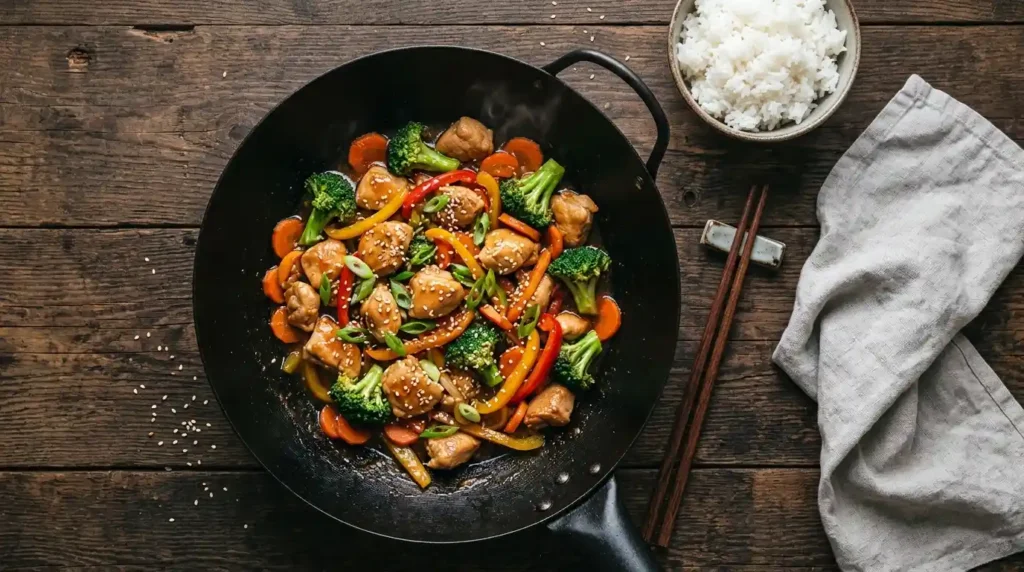
Easy chicken stir-fry with colorful vegetables in a glossy garlic-ginger sauce.
Why You’ll Love This Recipe
- It is ready in 30 minutes. From the first slice of the knife to the first bite, it takes about half an hour, which makes it one of the best quick dinner ideas for busy nights.
- The chicken is tender and juicy. A quick cornstarch coating protects the chicken from the heat so it never turns dry or rubbery.
- The sauce is simple and delicious. Soy sauce, honey, garlic, ginger, rice vinegar and sesame oil make a sauce that is savory, a little sweet and full of flavor.
- It is packed with vegetables. Broccoli, carrots and peppers give you color, crunch and nutrition in every bite.
- It is a one-pan meal. There is only one pan to wash, plus a cutting board and a small bowl.
- It is healthier than takeout. You control the oil, the salt and the sugar, and you know exactly what is going into the pan.
- It is endlessly flexible. Use whatever vegetables you have, swap the protein, or turn up the heat. It works every time.
What Makes a Great Chicken Stir-Fry?
Stir-frying is a technique more than a recipe. It means cooking small pieces of food very quickly over high heat while stirring constantly. When it is done right, the chicken is golden on the outside and tender inside, the vegetables are bright and still have a bite, and everything is coated in a sauce that clings instead of pooling at the bottom of the pan. A few simple things make the difference.
- Everything is prepped before you turn on the heat. Stir-frying moves fast, so the chicken, vegetables and sauce should all be ready and within reach.
- The pan is hot. A hot pan sears the food instead of steaming it. You should hear a loud sizzle when the chicken hits the oil.
- The pieces are cut small and evenly. Thin chicken strips and bite-size vegetables cook quickly and at the same speed.
- The pan is not crowded. Too much food at once drops the temperature and makes everything release water and steam. Cook in batches if needed.
- The sauce is thickened with cornstarch. This gives it that glossy, sticky texture you find in your favorite takeout.
Ingredients You’ll Need

Simple ingredients: chicken, fresh vegetables, garlic, ginger, soy sauce and honey.
For the Chicken
- 1½ lb (680 g) boneless, skinless chicken breasts
- 1 tbsp cornstarch
- 1 tbsp soy sauce
- ½ tsp salt and ¼ tsp black pepper
- 2 tbsp neutral oil (avocado, canola or vegetable), for cooking
For the Vegetables
- 2 cups (about 200 g) broccoli florets
- 1 large carrot, thinly sliced
- 1 red bell pepper, cut into strips
- 1 yellow bell pepper, cut into strips
- ½ medium onion, sliced
- 3 garlic cloves, minced
- 1 tbsp fresh ginger, grated
- 2 green onions, sliced, for serving
- 1 tbsp sesame seeds, for serving
For the Stir-Fry Sauce
- ⅓ cup (80 ml) low-sodium soy sauce
- 2 tbsp honey
- 1 tbsp rice vinegar
- 1 tbsp toasted sesame oil
- 1 tbsp cornstarch
- ¼ cup (60 ml) water or chicken broth
- ¼ tsp red pepper flakes (optional)
A Few Notes on the Ingredients
Chicken: Boneless, skinless chicken breasts are lean and quick to cook, and they stay tender when sliced thin and coated in cornstarch. Boneless thighs are juicier and more forgiving if you prefer them. Either works well in this recipe.
Cornstarch: It is used twice. A spoonful coats the chicken to keep it silky, and another thickens the sauce so it turns glossy and sticky. Do not skip it.
Soy sauce: Low-sodium soy sauce lets you control the saltiness. If you only have regular, use a little less and add water to the sauce.
Honey: It balances the salty soy sauce and gives the sauce a lovely shine. Brown sugar or maple syrup also work.
Rice vinegar: A small splash adds brightness and keeps the sauce from tasting heavy. Lime juice or apple cider vinegar can stand in.
Toasted sesame oil: It is strongly flavored, so a little goes a long way. It goes into the sauce, not the hot pan, so the flavor stays fresh.
Fresh garlic and ginger: They are the aroma of a great stir-fry. Fresh is much better than powder here.
Neutral oil: Use an oil with a high smoke point, such as avocado or canola. Olive oil is not ideal for very high heat.
Equipment You’ll Need
- A large wok or a wide 12-inch (30 cm) skillet, preferably cast iron or stainless steel
- A sharp knife and a large cutting board
- A wooden spatula or a spoon for stirring
- A small bowl and whisk for the sauce
- A medium bowl for tossing the chicken
Chicken 101: Tender Stir-Fry Chicken Every Time
The biggest complaint about homemade chicken stir-fry is that the chicken turns out dry or chewy. These habits fix that for good.
Slice It Thin and Against the Grain
Cut the chicken into strips about ¼ inch (6 mm) thick, slicing across the muscle fibers instead of along them. Shorter fibers are more tender when you chew. If the chicken is hard to slice, pop it in the freezer for 15 minutes first, and it will firm up so you can cut it more evenly.
Coat It in Cornstarch
Tossing the chicken with cornstarch, soy sauce, salt and pepper for about 10 minutes does two things. It seasons the meat, and it forms a light coating that protects it in the hot pan. The result is tender, juicy chicken with a silky texture and a little crust.
Use High Heat and Do Not Crowd the Pan
A hot pan sears the chicken quickly so it browns before it can dry out. Spread the pieces in a single layer and let them cook for the first minute or two without stirring. If the pan is crowded, the chicken will steam and turn pale, so work in two batches when needed.
Do Not Fully Cook It at the Start
The chicken only needs to be golden and almost cooked through. It finishes in the sauce at the end, which keeps it moist. It is done when it reaches 165°F (74°C) in the thickest piece and is no longer pink inside.
How to Make Chicken Stir-Fry
Step 1: Slice and Marinate the Chicken
Slice the chicken breasts into thin strips, about ¼ inch thick and 2 inches long. Pat them dry with paper towels, since a dry surface browns better.

Slice the chicken into thin, even strips.
Place the chicken in a bowl and add the cornstarch, 1 tablespoon of soy sauce, salt and pepper. Toss until every piece is lightly coated, then let it sit for 10 minutes while you prepare everything else.

Toss the chicken with cornstarch and soy sauce to keep it tender.
Step 2: Whisk the Stir-Fry Sauce
In a small bowl, whisk together the soy sauce, honey, rice vinegar, sesame oil, water or broth, cornstarch and red pepper flakes. Add the minced garlic and grated ginger if you like, or keep them separate to cook in the pan. Whisk well so the cornstarch dissolves completely, and give it another stir right before you pour it in, since cornstarch settles to the bottom.

Whisk the sauce until the cornstarch dissolves.
Step 3: Prep the Vegetables
Cut the broccoli into small florets, slice the carrot thinly, and cut the bell peppers and onion into strips. Cut everything to a similar size so it cooks at the same speed. Slice the carrot thin, because it is the hardest vegetable and takes the longest to soften.

Cut the vegetables into similar bite-size pieces.
Step 4: Sear the Chicken
Heat 1 tablespoon of the oil in a large wok or skillet over high heat until it shimmers and just begins to smoke. Add the chicken in a single layer. Let it cook undisturbed for 1 to 2 minutes until golden underneath, then stir and cook for another 2 to 3 minutes. The chicken should be browned and almost cooked through. Move it to a clean plate.

Sear the chicken over high heat until golden.
Step 5: Stir-Fry the Vegetables
Add the remaining 1 tablespoon of oil to the same pan. Add the carrots and broccoli first and stir-fry for 2 to 3 minutes. Add the bell peppers and onion and cook for another 2 minutes, until the vegetables are bright and crisp-tender. Add the garlic and ginger and stir for 30 seconds until fragrant. If the pan gets dry, add a splash of water to help the vegetables steam briefly.

Stir-fry the vegetables until bright and crisp-tender.
Step 6: Add the Chicken and Sauce
Return the chicken and any juices to the pan. Give the sauce one more quick whisk and pour it over everything, stirring to coat.

Pour the sauce over the chicken and vegetables.
Step 7: Simmer Until Glossy
Cook for 1 to 2 minutes, stirring constantly, until the sauce bubbles, thickens and coats the chicken and vegetables in a shiny glaze. Take the pan off the heat right away so the vegetables stay crisp. Taste and add a little more soy sauce, honey or vinegar if you like. Top with sesame seeds and sliced green onions.

The sauce thickens quickly into a glossy glaze.
Tips for the Best Chicken Stir-Fry
- Prep everything first. Once the pan is hot, there is no time to chop. Line up the chicken, vegetables and sauce before you start.
- Get the pan very hot. This gives you a good sear and prevents steaming.
- Pat the chicken dry. Moisture is the enemy of browning.
- Cook in batches. If your pan is small, cook the chicken in two rounds. It is worth the extra minute.
- Add vegetables by cooking time. Hard ones like carrots and broccoli go in first, and softer ones like peppers and onions go in after.
- Whisk the sauce again before using it. Cornstarch sinks, so a final stir keeps the sauce smooth.
- Do not overcook the vegetables. They keep cooking in the hot sauce, so pull the pan off the heat when they are still a little crisp.
- Add the sesame oil at the end. High heat can burn it and turn it bitter, so add it to the sauce or drizzle it over the finished dish.
- Taste and adjust. A squeeze of lime, a drizzle of honey or a pinch of chili flakes can fix the balance in seconds.
Common Mistakes to Avoid
- Overcrowding the pan. It lowers the temperature and makes everything soggy. Use a bigger pan or cook in batches.
- Cutting the chicken too thick. Thick pieces take longer and can dry out on the outside before the center is done.
- Stirring too soon. Letting the chicken sit for a minute or two builds a golden crust.
- Skipping the cornstarch. Without it, the chicken is less tender and the sauce stays thin.
- Adding the sauce too early. If you pour it in before the food is nearly cooked, everything boils instead of searing.
- Using too much oil. Two tablespoons is enough. More can make the dish greasy.
- Burning the garlic. It cooks in seconds. Add it after the vegetables and stir constantly.
- Overcooking the vegetables. Mushy broccoli ruins a stir-fry. Keep it crisp-tender.
Variations to Try
- Teriyaki Chicken Stir-Fry: Add 2 extra tablespoons of honey and 1 tablespoon of mirin to the sauce for a sweeter, stickier glaze.
- Spicy Chicken Stir-Fry: Add 1 to 2 teaspoons of sriracha or chili garlic sauce to the sauce, or a pinch of extra red pepper flakes.
- Orange Ginger Chicken Stir-Fry: Replace the water in the sauce with ¼ cup of fresh orange juice and add 1 teaspoon of orange zest.
- Cashew Chicken Stir-Fry: Toss in ⅓ cup of roasted cashews at the end for crunch.
- Beef, Shrimp or Tofu Stir-Fry: Swap the chicken for thinly sliced flank steak, peeled shrimp or pressed, cubed firm tofu. Shrimp cooks in 2 to 3 minutes, so add it last.
- More Veggies: Add snap peas, mushrooms, zucchini, baby corn, snow peas, cabbage or bok choy.
- Noodle Stir-Fry: Toss in 8 oz of cooked lo mein or rice noodles with the sauce and add a splash more water.
- Creamy Chicken Dinner: If you love chicken but want a richer meal, try our Marry Me Chicken for a creamy sun-dried tomato option.
Easy Substitutions
| Ingredient | You can use |
|---|---|
| Chicken breasts | Boneless, skinless chicken thighs or chicken tenders |
| Soy sauce | Tamari (gluten-free) or coconut aminos |
| Honey | Maple syrup or brown sugar |
| Rice vinegar | Lime juice or apple cider vinegar |
| Cornstarch | Arrowroot powder or potato starch |
| Fresh ginger | ½ tsp ground ginger |
| Sesame oil | A small extra splash of neutral oil plus a pinch of sesame seeds |
| Broccoli, carrots, peppers | Snap peas, zucchini, mushrooms, green beans or cabbage |
Making It Gluten-Free, Low-Carb or Healthier
To make it gluten-free, use tamari or coconut aminos in place of soy sauce. For a low-carb dinner, skip the rice and serve the stir-fry over cauliflower rice or zucchini noodles. To cut sodium, use low-sodium soy sauce and add extra ginger, garlic and a splash of rice vinegar for flavor. To add more fiber and nutrients, load the pan with extra vegetables and serve over brown rice or quinoa.
Make-Ahead and Meal Prep
This recipe is perfect for meal prep. Slice the chicken and vegetables up to two days ahead and store them in separate containers in the fridge. Whisk the sauce and keep it in a jar for up to 5 days. When it is time to cook, dinner takes less than 15 minutes. You can also cook the whole stir-fry and pack it with rice in lunch containers. It reheats well, and the sauce keeps everything moist.
What to Serve With Chicken Stir-Fry
This stir-fry is a complete meal on its own, but it pairs well with a few simple sides. Here are some of the best dinner ideas to go with it.
- Steamed white or jasmine rice: The classic choice, perfect for soaking up the extra sauce.
- Brown rice or quinoa: A heartier, higher-fiber option.
- Fried rice or egg fried rice: Turn it into a feast.
- Lo mein or rice noodles: Toss them right in the pan.
- Cauliflower rice: For a lighter, low-carb dinner.
- Egg rolls or dumplings: For a fun takeout-night spread.
- A crisp cucumber salad: A cool, tangy contrast to the warm sauce.

Serve the stir-fry over steamed rice with sesame seeds and green onions.
Storing and Reheating Leftovers
Let the stir-fry cool for no more than 30 minutes, then store it in an airtight container in the fridge for up to 4 days. For the best texture, keep the rice in a separate container.
To reheat, warm it in a hot skillet over medium-high heat with a splash of water or broth for 2 to 3 minutes, stirring until hot. This revives the sauce and keeps the vegetables from getting too soft. You can also microwave it in 1-minute intervals, stirring in between. Reheat to an internal temperature of 165°F (74°C). To freeze, pack the cooled stir-fry in a freezer-safe container for up to 2 months and thaw overnight in the fridge. The vegetables will be a little softer after thawing, but the flavor stays great.
Making It for a Crowd
Chicken stir-fry is easy to scale up. For a larger group, double the recipe but cook the chicken and vegetables in separate batches so the pan never gets crowded. Keep the finished batches warm in a low oven, then combine everything and add the sauce at the end. Set out rice, noodles and toppings like sesame seeds, green onions, crushed peanuts and chili oil so everyone can build their own bowl.
Frequently Asked Questions
What is the best cut of chicken for stir-fry?
Boneless, skinless chicken breast is the most popular choice because it is lean and cooks quickly, and it stays tender when sliced thin and coated in cornstarch. Boneless, skinless thighs are also excellent and are more forgiving because they have more fat. Slice either one into thin, even strips so they cook in just a few minutes.
How do I keep chicken tender in a stir-fry?
Slice it against the grain, toss it with cornstarch and a little soy sauce for 10 minutes before cooking, and sear it in a very hot pan without crowding. This simple coating, often called velveting, seals in moisture. Cook the chicken only until it is golden and nearly done, then finish it in the sauce.
How do I make the stir-fry sauce thick and glossy?
Cornstarch is the key. Whisk it into the cold sauce before it goes into the pan, because it can clump in hot liquid. Then pour the sauce over the hot chicken and vegetables and stir for 1 to 2 minutes. It thickens as soon as it bubbles and turns glossy and sticky.
Can I use frozen vegetables?
Yes. Frozen stir-fry vegetables or broccoli florets work well. Do not thaw them first, since that makes them watery. Add them straight to a very hot pan and cook a minute or two longer, letting the extra moisture cook off before you add the sauce.
Can I make this stir-fry without a wok?
Absolutely. A large, wide skillet, preferably cast iron or stainless steel, works very well. The most important thing is high heat and enough space, so cook in two batches if your pan is on the small side.
How can I make it gluten-free or lower in sodium?
Use gluten-free tamari in place of soy sauce, and check that your chicken broth is gluten-free if you use it. For less sodium, choose low-sodium soy sauce and add a splash of rice vinegar and extra ginger and garlic to keep the flavor bright.
How long do leftovers keep, and can I freeze them?
Leftovers keep for up to 4 days in an airtight container in the fridge. Reheat in a hot skillet with a splash of water for 2 to 3 minutes. You can freeze the cooked stir-fry for up to 2 months, though the vegetables will be softer after thawing.
Final Thoughts
This chicken stir-fry proves that a fast, healthy dinner does not have to be boring. Thin strips of chicken stay tender thanks to a simple cornstarch coating, fresh vegetables stay crisp thanks to a hot pan, and the glossy garlic-ginger sauce ties everything together. Once you have the method down, you can change the vegetables, the protein or the sauce to match what is in your fridge. It is one of those quick dinner recipes that you will make again and again, and it is a great way to get a delicious meal on the table in 30 minutes.

We’d Love to Hear From You!
Did you make this chicken stir-fry? Tell us how it turned out in the comments below, and share your favorite vegetables and what you served it with. We read every comment, and your tips might help other readers. If you enjoyed this easy dinner recipe, save it on Pinterest for your next dinner idea.