14 Gluten-Free Pasta Salad Recipes for Every Occasion

Finding a good gluten-free pasta salad used to mean settling for a bland vinaigrette over rice noodles, but that’s no longer the case. This collection of 14 gluten-free pasta salad recipes covers everything from a classic Greek-style salad with feta and olives to a spicy buffalo chicken version and a bright, herby lemon shrimp salad. Every recipe uses widely available gluten-free pasta shapes, so whether you reach for corn, brown rice, or chickpea pasta, you’ll get a dish with real texture and flavor rather than a mushy afterthought.
These recipes are organized to work for almost any occasion: light and fresh options for summer potlucks, heartier versions built around chicken, shrimp, or sausage for a full meal, and a few naturally vegan and dairy-free choices for mixed dietary tables. Each recipe includes a full ingredient list, step-by-step instructions, estimated nutrition per serving, and two extra sections — Why It Works, which explains the technique behind the recipe, and Worth Knowing, which covers substitutions, storage, and things to watch for if you’re cooking gluten-free for someone with celiac disease rather than just a sensitivity. A full shopping list and answers to common gluten-free pasta salad questions are included near the end.
Shopping List
Here’s a consolidated shopping list covering ingredients across all 14 recipes. Pick and choose based on which salads you’re making this week.
- Gluten-free pasta shapes: rotini, fusilli, penne, elbow, shell, chickpea shells, corn pasta, rice noodles (check each recipe for the best shape)
- Proteins: rotisserie chicken, shrimp, Italian sausage, ground beef, bacon, chickpeas, black beans, edamame
- Dairy: feta, fresh mozzarella, parmesan, cheddar, blue cheese
- Produce: cherry tomatoes, cucumber, bell peppers, red onion, avocado, broccoli, corn, basil, parsley, dill, cilantro, scallions, garlic, lemons, limes
- Pantry & condiments: olive oil, red wine vinegar, balsamic glaze, mayonnaise, ranch dressing, buffalo sauce, basil pesto, gluten-free soy sauce or tamari, toasted sesame oil, gluten-free taco seasoning, gluten-free tortilla chips
- Other: kalamata & black olives, sun-dried tomatoes, marinated artichoke hearts, pine nuts, sesame seeds, hard-boiled eggs
1. Classic Gluten-Free Greek Pasta Salad
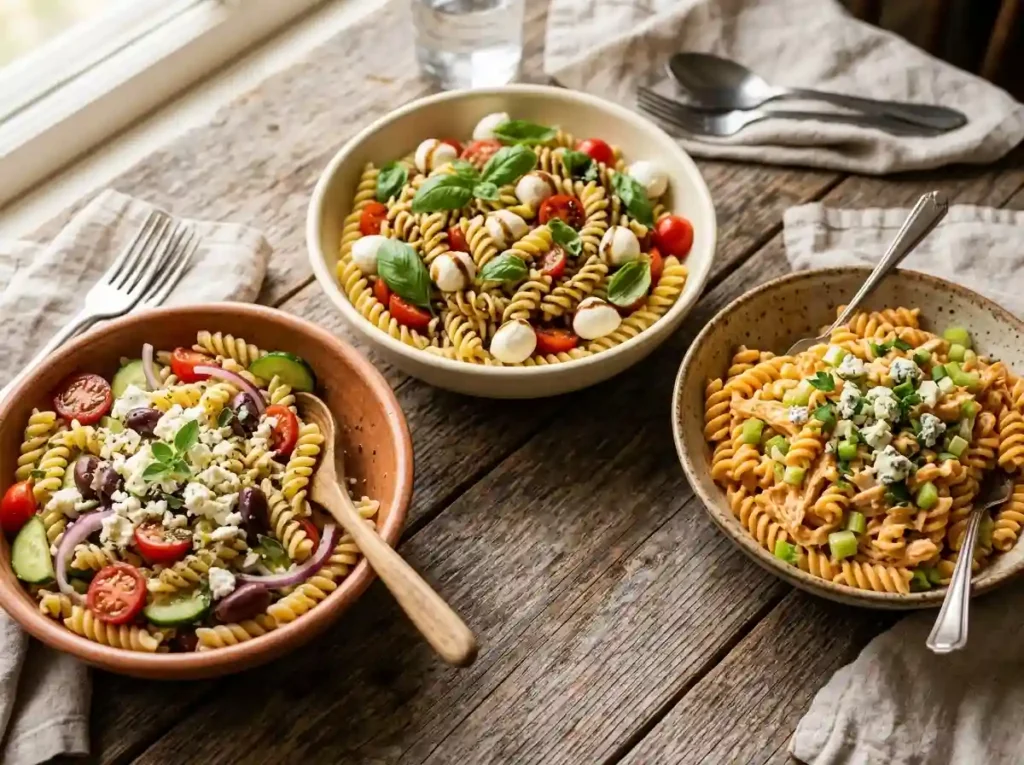
This gluten-free Greek pasta salad takes everything you love about a classic Mediterranean salad and turns it into a hearty, satisfying side dish. Tender gluten-free rotini gets tossed with briny kalamata olives, crumbled feta, crisp cucumber, and juicy cherry tomatoes, all finished with a simple olive oil and oregano dressing that ties every bite together.
What makes this version stand out is the balance of textures: the pasta stays pleasantly chewy instead of mushy, the vegetables keep their crunch, and the feta melts just slightly into the warm noodles before everything is chilled. It’s the kind of dish you can make the night before and it only gets better as the flavors settle.
Why It Works
- Using a corn or brown rice-based rotini holds its shape far better than delicate gluten-free spaghetti shapes, which tend to break apart when tossed with heavier mix-ins like olives and feta.
- Salting the pasta water generously is especially important for gluten-free pasta, since the alternative starches absorb seasoning less readily than wheat pasta once cooked.
- Letting the salad rest for at least 30 minutes before serving allows the olive oil dressing to soak into the gluten-free noodles, which otherwise can taste slightly bland straight out of the colander.
Worth Knowing
- Not all feta is created equal for a gluten-free kitchen — some pre-crumbled tubs are dusted with wheat starch as an anti-caking agent, so it’s worth checking the label if you’re cooking for someone with celiac disease rather than just a gluten sensitivity.
- This salad actually improves over 24 hours in the fridge, making it one of the better make-ahead options on this list for potlucks or meal prep.
- If you want to lighten it up, swapping half the olive oil for plain Greek yogurt keeps the tang while cutting a noticeable amount of fat per serving.
Ingredients
- 12 oz gluten-free rotini or fusilli pasta
- 1 cup crumbled feta cheese
- 1 cup kalamata olives, pitted and halved
- 1 English cucumber, diced
- 1 cup cherry tomatoes, halved
- 1/2 red onion, thinly sliced
- 1/3 cup extra virgin olive oil
- 2 tbsp red wine vinegar
- 1 tsp dried oregano
- Salt and black pepper to taste
Instructions
- Bring a large pot of generously salted water to a boil and cook the gluten-free pasta according to package directions, stirring occasionally to prevent sticking.
- Drain the pasta and rinse briefly under cool water to stop the cooking process, then let it cool to room temperature.
- While the pasta cools, whisk together the olive oil, red wine vinegar, oregano, salt, and pepper in a small bowl.
- In a large mixing bowl, combine the cooled pasta, feta, olives, cucumber, cherry tomatoes, and red onion.
- Pour the dressing over the salad and toss gently to coat everything evenly.
- Cover and refrigerate for at least 30 minutes before serving to let the flavors meld.
2. Gluten-Free Caprese Pasta Salad

Inspired by the classic Italian caprese salad, this gluten-free pasta version pairs brown rice fusilli with creamy fresh mozzarella pearls, sweet cherry tomatoes, and fragrant torn basil. A drizzle of balsamic glaze adds just the right amount of tang to round out every forkful.
This is one of the simplest recipes on the list, which makes it a great starting point if you’re new to gluten-free pasta salads. There’s no cooking beyond boiling the pasta, and the ingredient list stays short and fresh rather than leaning on heavy sauces.
Why It Works
- Fresh mozzarella pearls are used instead of shredded mozzarella because they hold their shape at room temperature and don’t turn rubbery once the salad is chilled and re-served.
- Tearing the basil by hand rather than chopping it with a knife prevents the leaves from bruising and turning brown before you serve the salad, which matters more in a make-ahead dish.
- A short rest at room temperature after assembling — rather than going straight into the fridge — helps the olive oil and balsamic glaze cling to the gluten-free pasta more evenly.
Worth Knowing
- Balsamic glaze (the thick, syrupy kind) is not the same as balsamic vinegar, and using regular vinegar instead will make the salad noticeably more acidic, so adjust quantities if you swap it in.
- This salad is best eaten within two days, since the tomatoes release liquid over time and can make the pasta soggier than the other recipes on this list.
- For a dairy-free adaptation, marinated artichoke hearts or white beans can stand in for the mozzarella while keeping a similar creamy texture.
Ingredients
- 12 oz gluten-free fusilli or penne pasta
- 8 oz fresh mozzarella pearls
- 1 1/2 cups cherry tomatoes, halved
- 1/2 cup fresh basil leaves, torn
- 3 tbsp extra virgin olive oil
- 2 tbsp balsamic glaze
- 2 cloves garlic, minced
- Salt and black pepper to taste
Instructions
- Cook the gluten-free pasta in salted boiling water until al dente, then drain and let cool slightly.
- In a large bowl, toss the warm pasta with olive oil and minced garlic so the garlic flavor infuses as it cools.
- Add the mozzarella pearls, halved cherry tomatoes, and torn basil to the bowl.
- Season with salt and pepper, then toss gently to combine without breaking up the mozzarella.
- Drizzle with balsamic glaze right before serving so it doesn’t get absorbed into the pasta.
- Serve at room temperature or lightly chilled for the best texture.
3. Gluten-Free Pesto Pasta Salad with Cherry Tomatoes

This gluten-free pesto pasta salad leans on a vibrant basil pesto to coat every piece of penne in bright, herby flavor. Halved cherry tomatoes add pops of sweetness, while toasted pine nuts and shaved parmesan bring a bit of crunch and salty depth.
Because pesto is naturally gluten-free (as long as you check the parmesan and any packaged versions), this recipe is one of the easier swaps to make allergy-friendly without changing the flavor at all. It tastes just as rich and herbaceous as the traditional version.
Why It Works
- Tossing the pasta with pesto while it’s still slightly warm — rather than fully cooled — helps the oil-based sauce coat each piece more evenly and prevents clumping once refrigerated.
- Toasting the pine nuts separately before adding them keeps their crunch intact; adding raw pine nuts straight from the bag results in a softer, less noticeable texture once mixed in.
- Reserving a small amount of pasta cooking water and stirring it into the pesto loosens the sauce just enough to coat gluten-free noodles, which tend to soak up less oil than wheat pasta.
Worth Knowing
- Store-bought pesto is convenient, but many jarred versions use hard cheeses that aren’t vegetarian and occasionally include gluten-based anti-caking agents, so reading labels carefully matters here.
- This salad tends to darken slightly in the fridge because basil oxidizes; a squeeze of lemon juice mixed into the pesto helps slow that discoloration.
- For extra protein without changing the flavor profile much, grilled chicken or white beans are easy additions that pair naturally with the pesto’s herbiness.
Ingredients
- 12 oz gluten-free penne pasta
- 3/4 cup basil pesto
- 1 1/2 cups cherry tomatoes, halved
- 1/4 cup pine nuts, toasted
- 1/3 cup shaved parmesan
- 1 tbsp lemon juice
- Salt and black pepper to taste
Instructions
- Cook the gluten-free penne in salted boiling water until al dente, reserving 1/4 cup of the pasta water before draining.
- While the pasta is still warm, toss it with the pesto and a splash of the reserved pasta water until well coated.
- Stir in the lemon juice, then let the pasta cool to room temperature.
- Add the halved cherry tomatoes and toasted pine nuts, tossing gently to combine.
- Season with salt and pepper to taste.
- Top with shaved parmesan just before serving.
4. Gluten-Free Chickpea Pasta Salad with Lemon Vinaigrette

Built on protein-rich chickpea pasta shells, this salad combines hearty chickpeas, crunchy bell peppers, and fresh parsley in a bright lemon vinaigrette. It’s naturally higher in protein and fiber than most pasta salads, making it filling enough to serve as a light lunch on its own.
Chickpea pasta has a slightly nuttier flavor and denser bite than corn or rice-based gluten-free pastas, which actually works in this recipe’s favor — it holds up well against the acidity of the lemon dressing without turning mushy.
Why It Works
- Chickpea pasta cooks faster than wheat or rice pasta and can go from perfectly al dente to gummy in under a minute, so checking it a minute or two early is worth the extra attention.
- Rinsing the cooked chickpea pasta under cold water immediately after draining removes excess surface starch, which otherwise makes this particular pasta type clump together as it cools.
- Adding the lemon vinaigrette in two stages — once while warm and once right before serving — keeps the flavor bright instead of fading, since chickpea pasta absorbs dressing quickly.
Worth Knowing
- Chickpea pasta contains meaningfully more protein and fiber per serving than corn or rice pasta, which is useful information if you’re building this salad into a meal-prep rotation rather than serving it as a side.
- The pasta’s color can look slightly beige or yellow-green depending on the brand, which is normal and not a sign it’s overcooked or undercooked.
- This salad is naturally vegan as written, making it one of the more versatile options on this list for mixed dietary gatherings.
Ingredients
- 12 oz gluten-free chickpea pasta shells
- 1 (15 oz) can chickpeas, drained and rinsed
- 1 red bell pepper, diced
- 1 yellow bell pepper, diced
- 1/2 cup fresh parsley, chopped
- 1/4 cup extra virgin olive oil
- 3 tbsp fresh lemon juice
- 1 clove garlic, minced
- Salt and black pepper to taste
Instructions
- Cook the chickpea pasta shells in salted boiling water, checking a minute or two before the package time since this pasta cooks quickly.
- Drain and rinse the pasta under cold water to stop the cooking and remove excess starch.
- Whisk together the olive oil, lemon juice, minced garlic, salt, and pepper in a small bowl.
- In a large bowl, combine the cooled pasta, chickpeas, diced bell peppers, and parsley.
- Pour half the dressing over the salad and toss to combine.
- Chill for 20 minutes, then toss with the remaining dressing just before serving.
5. Gluten-Free Buffalo Chicken Pasta Salad

For anyone who wants a little heat, this gluten-free buffalo chicken pasta salad delivers all the flavor of buffalo wings in a cool, creamy pasta form. Shredded chicken gets tossed in tangy buffalo sauce, then combined with crunchy celery, shredded carrots, and a cooling ranch drizzle.
This one leans more toward a main-dish salad than a side, thanks to the shredded chicken. It’s a favorite for game-day spreads and potlucks where people want something more substantial than a typical mayo-based pasta salad.
Why It Works
- Tossing the shredded chicken in buffalo sauce before combining it with the pasta — rather than adding sauce to everything at once — keeps the heat concentrated where it’s expected instead of diluting it across the whole salad.
- Using rotisserie chicken saves significant time and shreds more easily than freshly poached chicken breast, since it’s already tender from slow roasting.
- Adding the celery and carrots just before serving rather than during the initial mix keeps their crunch from softening in the ranch dressing.
Worth Knowing
- Most buffalo sauces are naturally gluten-free since they’re primarily hot sauce and butter, but it’s worth double-checking the brand if serving someone with celiac disease, as a few blends include wheat-based thickeners.
- This salad runs spicier than most on this list; cutting the buffalo sauce with a bit of extra ranch is an easy way to tone down the heat for a crowd without changing the recipe structure.
- Leftover rotisserie chicken from another meal works perfectly here, making this one of the more budget-friendly options if you’re already cooking chicken for something else during the week.
Ingredients
- 12 oz gluten-free rotini pasta
- 2 cups shredded rotisserie chicken
- 1/3 cup buffalo sauce
- 2 celery stalks, thinly sliced
- 1/2 cup shredded carrots
- 1/2 cup ranch dressing
- 2 tbsp crumbled blue cheese (optional)
- Salt and black pepper to taste
Instructions
- Cook the gluten-free rotini in salted boiling water until al dente, then drain and let cool.
- In a medium bowl, toss the shredded chicken with the buffalo sauce until evenly coated.
- In a large bowl, combine the cooled pasta, buffalo chicken, celery, and shredded carrots.
- Add the ranch dressing and toss until everything is well coated.
- Season with salt and pepper to taste.
- Top with crumbled blue cheese if using, and serve chilled or at room temperature.
6. Gluten-Free Mediterranean Pasta Salad with Sun-Dried Tomatoes

Packed with sun-dried tomatoes, marinated artichoke hearts, black olives, and crumbled feta, this Mediterranean-style pasta salad brings bold, savory flavor to the table. The sun-dried tomatoes add a concentrated sweetness that balances the briny olives and tangy feta.
This recipe uses the oil from the sun-dried tomato jar as part of the dressing, which cuts down on food waste and adds an extra layer of flavor you wouldn’t get from plain olive oil alone.
Why It Works
- Using the reserved oil from a jar of sun-dried tomatoes as the dressing base means the oil is already infused with tomato flavor, which adds more depth than starting with plain olive oil.
- Chopping the sun-dried tomatoes into small pieces rather than leaving them in strips distributes their concentrated flavor more evenly throughout the salad instead of leaving pockets of intense flavor.
- Draining the marinated artichoke hearts well before adding them prevents excess liquid from watering down the dressing over time in the fridge.
Worth Knowing
- Sun-dried tomatoes packed in oil are significantly more flavorful than the dry-packed variety, but they also add more fat and calories, so portion accordingly if that’s a consideration.
- This salad’s flavors deepen considerably after a full day in the fridge, making it one of the better options to prepare a day ahead of a gathering.
- For a lower-sodium version, using fewer olives and rinsing the feta briefly under water can cut a meaningful amount of salt without losing the Mediterranean character of the dish.
Ingredients
- 12 oz gluten-free fusilli pasta
- 1/2 cup sun-dried tomatoes in oil, chopped (oil reserved)
- 1 cup marinated artichoke hearts, drained and quartered
- 1/2 cup black olives, halved
- 3/4 cup crumbled feta cheese
- 2 tbsp red wine vinegar
- 1 tsp dried oregano
- Salt and black pepper to taste
Instructions
- Cook the gluten-free fusilli in salted boiling water until al dente, then drain and let cool.
- Whisk together 3 tablespoons of the reserved sun-dried tomato oil, red wine vinegar, oregano, salt, and pepper.
- In a large bowl, combine the cooled pasta, chopped sun-dried tomatoes, artichoke hearts, and olives.
- Pour the dressing over the salad and toss to coat.
- Gently fold in the feta cheese so it doesn’t break apart too much.
- Chill for at least 20 minutes before serving.
7. Gluten-Free Broccoli Cheddar Pasta Salad

This gluten-free broccoli cheddar pasta salad combines steamed broccoli florets, sharp cheddar cubes, and crispy bacon bits in a creamy dressing that ties the whole dish together. It’s comfort food in pasta salad form, with just enough crunch from the broccoli to keep it from feeling heavy.
Kids and adults alike tend to gravitate toward this one at potlucks, since the flavor combination of cheddar and bacon is familiar and crowd-pleasing without needing any unusual ingredients.
Why It Works
- Blanching the broccoli briefly in the same pot used for the pasta water — rather than steaming it separately — saves a dish and gives the broccoli a slightly softer bite that blends better into the creamy dressing.
- Cutting the cheddar into small cubes rather than shredding it keeps distinct pockets of cheese flavor throughout the salad instead of the cheese melting into the dressing and disappearing.
- Cooking the bacon until very crisp and adding it just before serving keeps it from turning soft and chewy after sitting in the creamy dressing.
Worth Knowing
- Shocking the broccoli in ice water immediately after blanching locks in its bright green color, which makes a noticeable visual difference if you’re serving this at a gathering.
- This salad is one of the richer options on the list because of the combination of cheese, bacon, and a creamy base, so smaller portion sizes are worth keeping in mind if serving alongside other heavy dishes.
- Turkey bacon can be substituted for a slightly lighter version without significantly changing the overall flavor, since the smokiness carries most of the bacon flavor here.
Ingredients
- 12 oz gluten-free elbow pasta
- 2 cups broccoli florets
- 1 cup sharp cheddar cheese, cubed
- 6 slices bacon, cooked and crumbled
- 1/2 cup mayonnaise
- 2 tbsp apple cider vinegar
- 1 tbsp honey
- Salt and black pepper to taste
Instructions
- Cook the gluten-free elbow pasta in salted boiling water until al dente. In the last 90 seconds, add the broccoli florets to the same pot to blanch.
- Drain the pasta and broccoli together, then rinse under cold water to stop the cooking.
- Whisk together the mayonnaise, apple cider vinegar, honey, salt, and pepper in a small bowl.
- In a large bowl, combine the pasta, broccoli, cheddar cubes, and half the crumbled bacon.
- Pour the dressing over the salad and toss to coat evenly.
- Top with the remaining bacon just before serving.
8. Gluten-Free Taco Pasta Salad
This gluten-free taco pasta salad brings all the flavors of taco night into a cold, make-ahead dish. Corn-based pasta shells get tossed with seasoned ground beef, black beans, sweet corn, and diced tomatoes, then finished with shredded cheese and a scattering of crushed gluten-free tortilla chips for crunch.
It’s one of the heartier salads on this list, closer to a full meal than a side dish, and it’s especially popular for backyard cookouts where a Tex-Mex flavor profile fits right in alongside grilled favorites.
Why It Works
- Cooling the seasoned ground beef completely before mixing it into the pasta prevents residual heat from wilting the lettuce-adjacent crunch of the tortilla chips and softening the pasta’s texture.
- Using certified gluten-free taco seasoning matters more than people expect, since many spice blends use wheat flour as an anti-caking filler even though the spices themselves are naturally gluten-free.
- Adding the crushed tortilla chips only at the moment of serving, rather than mixing them in ahead of time, keeps them crunchy instead of turning soggy in the dressing.
Worth Knowing
- This salad holds up well for meal prep during the week as long as the tortilla chips are stored separately and added fresh to each portion right before eating.
- Swapping the ground beef for seasoned ground turkey or a plant-based crumble is an easy way to lighten this recipe without losing the taco flavor profile.
- A squeeze of lime juice right before serving brightens the whole dish and helps balance the richness of the cheese and beef.
Ingredients
- 12 oz gluten-free corn pasta shells
- 1 lb ground beef
- 2 tbsp gluten-free taco seasoning
- 1 (15 oz) can black beans, drained and rinsed
- 1 cup corn kernels (fresh, frozen, or canned)
- 1 cup diced tomatoes
- 1 cup shredded cheddar or Mexican blend cheese
- 1 cup crushed gluten-free tortilla chips
- 1/4 cup sour cream or ranch dressing
- 1 lime, juiced
Instructions
- Cook the gluten-free pasta shells in salted boiling water until al dente, then drain and let cool completely.
- While the pasta cooks, brown the ground beef in a skillet over medium heat, then stir in the taco seasoning according to the package instructions.
- Let the seasoned beef cool to room temperature.
- In a large bowl, combine the cooled pasta, beef, black beans, corn, and diced tomatoes.
- Stir in the sour cream or ranch dressing and lime juice, then fold in the shredded cheese.
- Top with crushed tortilla chips just before serving so they stay crunchy.
9. Gluten-Free Asian Sesame Pasta Salad

This gluten-free Asian sesame pasta salad swaps traditional wheat noodles for rice noodles, then tosses them with shredded carrots, edamame, and scallions in a glossy sesame-ginger dressing. It’s light, refreshing, and holds up beautifully cold, making it ideal for warm-weather gatherings.
The dressing does most of the heavy lifting here, combining toasted sesame oil, rice vinegar, and a touch of ginger for a flavor that feels distinctly different from every other mayo or vinaigrette-based salad on this list.
Why It Works
- Rice noodles need to be soaked or briefly boiled rather than fully cooked like traditional pasta, and overcooking them even by a minute results in a mushy, sticky texture that’s hard to toss evenly with the vegetables.
- Rinsing the cooked rice noodles under cold water immediately and tossing them with a small amount of sesame oil right away prevents them from clumping into a solid mass as they cool.
- Double-checking that the soy sauce used is labeled gluten-free (or substituting tamari) is essential here, since regular soy sauce is one of the most common hidden sources of gluten in Asian-inspired dressings.
Worth Knowing
- This salad is naturally dairy-free and easily made vegan, since the edamame provides plant-based protein without needing any substitutions.
- Toasted sesame oil is far more potent than regular sesame oil, so it’s used in small amounts as a flavoring rather than a base oil the way olive oil is used in other recipes on this list.
- The dressing can separate slightly in the fridge; giving the salad a good toss before serving redistributes the sesame oil evenly.
Ingredients
- 12 oz gluten-free rice noodles
- 1 cup shelled edamame
- 1 cup shredded carrots
- 3 scallions, thinly sliced
- 2 tbsp toasted sesame oil
- 3 tbsp rice vinegar
- 2 tbsp gluten-free soy sauce or tamari
- 1 tsp fresh grated ginger
- 1 tbsp toasted sesame seeds
Instructions
- Cook the rice noodles according to package directions, being careful not to overcook them, then drain and rinse under cold water.
- Toss the noodles with a teaspoon of the sesame oil immediately after draining to prevent clumping.
- In a small bowl, whisk together the remaining sesame oil, rice vinegar, soy sauce, and grated ginger.
- In a large bowl, combine the noodles, edamame, shredded carrots, and scallions.
- Pour the dressing over the salad and toss well to coat.
- Sprinkle with toasted sesame seeds before serving, chilled or at room temperature.
10. Gluten-Free Cobb-Style Pasta Salad

Inspired by the classic Cobb salad, this gluten-free pasta version layers crispy bacon, sliced hard-boiled egg, creamy avocado, cherry tomatoes, and blue cheese crumbles over a bed of gluten-free rotini. It’s rich, filling, and works just as well as a light main course as it does a side dish.
Because it includes avocado, this is one recipe on the list best assembled closer to serving time rather than made too far in advance, but the individual components can all be prepped ahead to make final assembly quick.
Why It Works
- Tossing the diced avocado in a little lemon or lime juice before adding it to the salad slows down browning, which is the main reason this dish is best assembled shortly before serving.
- Cooking the bacon until very crisp and letting it cool completely before crumbling keeps it from going soft when it meets the pasta’s residual moisture.
- Using a light vinaigrette instead of a heavy mayo-based dressing lets the richness of the avocado, egg, and blue cheese come through without the whole salad feeling overly heavy.
Worth Knowing
- This is one of the higher-fat recipes on the list due to the combination of bacon, avocado, egg yolk, and blue cheese, so it pairs well as a smaller side portion rather than a full plate if serving alongside other rich dishes.
- Hard-boiled eggs can be made up to three days ahead and stored unpeeled in the fridge, which makes assembling this salad much faster on the day you plan to serve it.
- For a milder flavor, crumbled feta or shredded cheddar can replace the blue cheese without disrupting the overall balance of the dish.
Ingredients
- 12 oz gluten-free rotini pasta
- 4 slices bacon, cooked and crumbled
- 2 hard-boiled eggs, sliced
- 1 avocado, diced
- 1 cup cherry tomatoes, halved
- 1/3 cup crumbled blue cheese
- 3 tbsp olive oil
- 1 tbsp red wine vinegar
- 1 tsp lemon juice
Instructions
- Cook the gluten-free rotini in salted boiling water until al dente, then drain and let cool.
- Whisk together the olive oil and red wine vinegar in a small bowl to make the dressing.
- Toss the diced avocado with the lemon juice in a separate small bowl to prevent browning.
- In a large bowl, toss the cooled pasta with the dressing.
- Arrange the bacon, sliced egg, avocado, cherry tomatoes, and blue cheese over the pasta.
- Toss gently just before serving to combine, or serve arranged for a more composed presentation.
11. Gluten-Free Pea and Bacon Pasta Salad

This simple gluten-free pea and bacon pasta salad combines sweet green peas, crispy bacon bits, and shaved parmesan in a light, creamy dressing. It’s a nostalgic, classic-style pasta salad that comes together quickly and appeals to picky eaters thanks to its mild, familiar flavors.
With minimal chopping and only a handful of ingredients, this is one of the fastest recipes on this list to pull together, making it a reliable option for last-minute side dish needs.
Why It Works
- Using frozen peas straight from the freezer and simply running them under warm water to thaw (rather than cooking them) keeps them bright green and slightly crisp instead of turning them mushy and dull.
- Adding the bacon just before serving, similar to the broccoli cheddar recipe, keeps it from softening in the creamy dressing over time.
- A touch of lemon zest in the dressing cuts through the richness of the mayo-based sauce and keeps the overall flavor from tasting flat.
Worth Knowing
- This salad is one of the mildest on the list, which makes it a good choice for gatherings with young children or guests who prefer less bold flavors than the buffalo chicken or taco versions.
- Fresh peas can be used in place of frozen when in season, but they should be blanched briefly first since raw fresh peas are firmer than their frozen counterparts.
- This recipe scales up easily for large gatherings since none of the ingredients require last-minute cooking beyond the pasta itself.
Ingredients
- 12 oz gluten-free shell pasta
- 1 1/2 cups frozen peas, thawed
- 5 slices bacon, cooked and crumbled
- 1/3 cup shredded parmesan
- 1/2 cup mayonnaise
- 1 tbsp lemon juice
- 1/2 tsp lemon zest
- Salt and black pepper to taste
Instructions
- Cook the gluten-free shell pasta in salted boiling water until al dente, then drain and rinse under cold water.
- Whisk together the mayonnaise, lemon juice, lemon zest, salt, and pepper in a small bowl.
- In a large bowl, combine the pasta, thawed peas, and parmesan.
- Pour the dressing over the salad and toss to coat evenly.
- Chill for at least 20 minutes.
- Top with the crumbled bacon just before serving.
12. Gluten-Free Bell Pepper & Sausage Pasta Salad

This heartier gluten-free pasta salad features sliced Italian sausage, roasted red and yellow bell peppers, and red onion tossed in a light vinaigrette. The smoky char from the roasted peppers pairs perfectly with the savory sausage, making this one of the more filling options on this list.
It works well warm, straight after roasting the peppers and slicing the sausage, or fully chilled, which makes it flexible for both weeknight dinners and make-ahead gatherings.
Why It Works
- Roasting the bell peppers under a broiler until slightly charred, rather than using them raw, brings out a natural sweetness and smokiness that raw peppers can’t replicate.
- Fully cooking the Italian sausage and letting it rest for a few minutes before slicing keeps the juices inside instead of leaking out onto the cutting board and, later, into the salad.
- Slicing the red onion very thinly and letting it sit briefly in the vinaigrette mellows its sharp bite before it’s tossed with the rest of the ingredients.
Worth Knowing
- Checking that the Italian sausage is labeled gluten-free is important here, since some sausages use breadcrumb fillers that aren’t obvious from the ingredient name alone.
- This salad can be served warm as a more traditional pasta dinner or chilled as a make-ahead salad, giving it more versatility than most other recipes on this list.
- Leftover roasted peppers from another meal can be used here to save time, since the roasting step is the most labor-intensive part of the recipe.
Ingredients
- 12 oz gluten-free penne pasta
- 1 lb Italian sausage links, gluten-free
- 1 red bell pepper, sliced
- 1 yellow bell pepper, sliced
- 1/2 red onion, thinly sliced
- 3 tbsp olive oil
- 2 tbsp red wine vinegar
- 1 tsp Italian seasoning
- Salt and black pepper to taste
Instructions
- Cook the gluten-free penne in salted boiling water until al dente, then drain and set aside.
- Broil the sliced bell peppers on a baking sheet until slightly charred, about 8 to 10 minutes, turning once.
- Cook the Italian sausage links in a skillet until fully cooked through, then let rest for 5 minutes before slicing.
- Whisk together the olive oil, red wine vinegar, Italian seasoning, salt, and pepper.
- In a large bowl, combine the pasta, roasted peppers, sliced sausage, and red onion.
- Pour the dressing over everything and toss to combine. Serve warm or chilled.
13. Gluten-Free Lemon Herb Shrimp Pasta Salad

This gluten-free lemon herb shrimp pasta salad combines grilled shrimp with fresh dill, parsley, and a zesty lemon herb dressing over tender gluten-free fusilli. It’s light, refreshing, and comes together quickly, making it a great option for warm evenings when you want something that feels a little more special.
The combination of fresh herbs and citrus keeps this salad tasting bright rather than heavy, and the shrimp adds enough protein to make it satisfying as a full meal rather than just a side dish.
Why It Works
- Grilling or searing the shrimp just until opaque and slightly firm — rather than cooking them longer for extra safety margin — prevents the rubbery texture that overcooked shrimp is known for.
- Cooling the shrimp separately from the pasta before combining them keeps the shrimp from continuing to cook from residual heat, which can happen if they’re added to still-warm pasta.
- Using a mix of fresh dill and parsley rather than just one herb gives the dressing more complexity without needing extra ingredients.
Worth Knowing
- Pre-cooked, frozen shrimp can be thawed and used here to save time, as long as they’re patted dry thoroughly before searing to help them brown rather than steam in the pan.
- This salad is best enjoyed within a day of making it, since shrimp can take on a slightly rubbery texture if stored much longer in a cold, acidic dressing.
- For a dairy-free, nut-free option, this is one of the more allergy-friendly recipes on the list as written, with no substitutions needed.
Ingredients
- 12 oz gluten-free fusilli pasta
- 1 lb shrimp, peeled and deveined
- 2 tbsp olive oil, divided
- 1/4 cup fresh dill, chopped
- 1/4 cup fresh parsley, chopped
- 3 tbsp fresh lemon juice
- 1 tsp lemon zest
- 1 clove garlic, minced
- Salt and black pepper to taste
Instructions
- Cook the gluten-free fusilli in salted boiling water until al dente, then drain and let cool.
- Pat the shrimp dry and season with salt and pepper. Heat 1 tablespoon of olive oil in a skillet over medium-high heat.
- Sear the shrimp for about 2 minutes per side, until just opaque, then remove from heat and let cool.
- Whisk together the remaining olive oil, lemon juice, lemon zest, and minced garlic in a small bowl.
- In a large bowl, combine the pasta, cooled shrimp, dill, and parsley.
- Pour the dressing over the salad and toss gently to combine. Chill briefly before serving.
14. Gluten-Free Southwest Black Bean Pasta Salad

Closing out the list, this gluten-free Southwest black bean pasta salad combines black beans, roasted corn, diced red bell pepper, and fresh cilantro in a zesty chili-lime dressing. It’s colorful, nutrient-dense, and holds up well as a make-ahead dish for lunches throughout the week.
This is one of the few recipes on this list that’s naturally vegan and dairy-free without any substitutions, which makes it a dependable option to include when cooking for a mixed group with different dietary needs.
Why It Works
- Charring the corn in a dry skillet before adding it to the salad — rather than using it straight from the can or freezer — adds a smoky depth that plays well against the bright chili-lime dressing.
- Rinsing the canned black beans thoroughly removes excess sodium and the slightly starchy canning liquid, which otherwise can make the dressing taste muddled.
- Adding the cilantro just before serving rather than during initial mixing keeps its flavor fresh, since cilantro tends to lose its brightness quickly once cut and combined with acidic dressings.
Worth Knowing
- This salad is naturally higher in fiber than most others on the list thanks to the black beans, which also helps it stay satisfying despite being lower in fat.
- For those sensitive to cilantro’s soapy taste (a known genetic trait), fresh parsley makes a suitable substitute without drastically changing the dish’s character.
- This is one of the best options on the list for meal prep, since it holds its texture and flavor well for up to four days in the refrigerator.
Ingredients
- 12 oz gluten-free corn or rice pasta
- 1 (15 oz) can black beans, drained and rinsed
- 1 cup corn kernels
- 1 red bell pepper, diced
- 1/4 cup fresh cilantro, chopped
- 3 tbsp olive oil
- 2 tbsp lime juice
- 1/2 tsp chili powder
- 1/2 tsp cumin
- Salt to taste
Instructions
- Cook the gluten-free pasta in salted boiling water until al dente, then drain and let cool.
- Heat a dry skillet over medium-high heat and char the corn kernels for 3 to 4 minutes, stirring occasionally, then let cool.
- Whisk together the olive oil, lime juice, chili powder, cumin, and salt in a small bowl.
- In a large bowl, combine the pasta, black beans, charred corn, and diced red bell pepper.
- Pour the dressing over the salad and toss to coat.
- Fold in the fresh cilantro just before serving.
Frequently Asked Questions
What is the best gluten-free pasta for pasta salad?
Corn-based and brown rice-based pastas tend to hold their shape best in cold pasta salads, since they stay firmer than more delicate gluten-free shapes like spaghetti. Chickpea and lentil-based pastas work well too and add extra protein, though they have a slightly nuttier flavor and denser bite.
How do I keep gluten-free pasta from getting mushy in a salad?
Rinse the cooked pasta under cold water immediately after draining to stop the cooking process and wash away excess surface starch. Avoid overcooking, since gluten-free pasta moves from al dente to mushy more quickly than wheat pasta, and toss it with a small amount of oil right after rinsing to prevent sticking.
Can I make gluten-free pasta salad ahead of time?
Most of the recipes on this list actually taste better after resting for a few hours or overnight in the fridge, since it gives the dressing time to soak in. Salads with avocado, shrimp, or fresh herbs are best assembled closer to serving time, with other components prepped in advance.
Is regular pasta salad dressing gluten-free?
Most vinaigrettes and mayonnaise-based dressings are naturally gluten-free, but it’s worth checking bottled dressings, soy sauce, and pre-made pesto, since these sometimes contain wheat-based thickeners or anti-caking agents. Making your own dressing at home is the easiest way to control this.
How long does gluten-free pasta salad last in the fridge?
Most of these salads keep well for three to four days when stored in an airtight container in the refrigerator. Salads containing avocado, shrimp, or fresh dairy like mozzarella are best eaten within one to two days for the best texture and flavor.
Can I freeze gluten-free pasta salad?
Freezing isn’t recommended for most pasta salads, gluten-free or otherwise, since the vegetables and dressing don’t hold up well after thawing and the pasta’s texture can turn mealy. It’s best to make these salads fresh and store leftovers in the fridge rather than the freezer.
Loved These Recipes?
Follow MealNiche on Pinterest for new gluten-free dinner ideas every week, and pin your favorite recipe from this list to save it for later.
Follow on Pinterest